Staging vs Scaffolding: Key Differences Guide
Quick Answer
Staging and scaffolding are both temporary structures found on building sites, but they serve distinct functions. Scaffolding provides access and support for workers at heights, whereas staging refers to raised platforms used for specific operations, such as formwork support or material staging. Knowing when and how to employ each is critical for safe and effective site management.
Quick Overview Table
| Aspect | Key Insight |
| Staging | Temporary platform for task-specific work and material support |
| Scaffolding | Access framework enabling workers to operate safely at height |
| Primary Difference | Staging supports loads; scaffolding supports people and access |
| Materials Used | Steel, aluminium, timber planks, couplers, and base plates |
| Common Use Cases | Staging for concrete formwork; scaffolding for façade work |
| Site Decision | Project height, load, duration, and access needs determine the choice |
Table of Contents
- Introduction
- What Is the Difference Between Staging and Scaffolding in Construction?
- Staging vs Scaffolding: Key Differences
- Materials and Components Used in Staging and Scaffolding
- When Should You Use Staging or Scaffolding on a Construction Site?
- Is Staging the Same as Formwork Support?
- Conclusion
- FAQs
Introduction
On every active building site, temporary structures are just as important as permanent ones. They decide how safely workers can reach elevated places, how effectively supplies are positioned, and how well the project timeline performs under real-world situations. Understanding staging vs scaffolding in exact and practical terms is not a semantic exercise.
What Is the Difference Between Staging and Scaffolding in Construction?
What Is Staging in Construction?
In construction, staging is a temporary elevated platform used to support loads, formwork, or workers during a specific phase of the construction process.
Designed to carry heavy weights, such as concrete formwork or equipment
Used for slab casting, bridge construction, and heavy structural work
Typically set to a predetermined height defined by the work requirements
Staging in construction refers to any temporary work platform
Also Read:
What Is Scaffolding?
Scaffolding is a modular, adjustable temporary framework that allows workers to safely access elevated work locations on a structure’s exterior or interior.
- Specifically intended for worker access, not heavy load-bearing
- Useful for bricklaying, plastering, painting, cladding, and repair work
- Fully customisable in height and arrangement to match the structure’s geometry
- Must conform with IS 3696 and local site safety norms in India
Staging vs Scaffolding: Key Differences
While all systems are temporary, staging and scaffolding have quite different purposes, load capacities, configurations, and typical applications across the phases of a building site.
| Factor | Staging | Scaffolding |
| Primary Purpose | Load and formwork support | Worker access at height |
| Load Capacity | High — supports structural loads | Moderate — supports workers and tools |
| Adjustability | Fixed platform, task-specific | Modular, reconfigurable on-site |
| Typical Use | Slab work, bridge decks, shoring | Façades, plastering, painting, repairs |
| Dismantling | After concrete curing or task end | Progressive as work sections are completed |
| Cost Basis | Priced by load and span requirements | Priced by height, area, and duration |
Materials and Components Used in Staging and Scaffolding
Both systems use comparable raw materials, but the components differ in form and function depending on whether load transfer or labour mobility is the top concern.
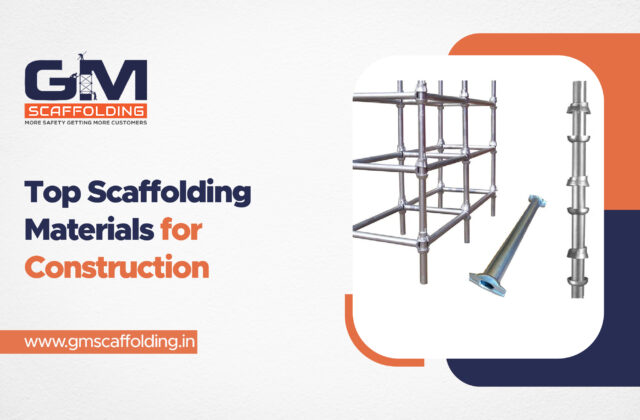
- Steel and aluminium tubes are the main structural components in both systems
- Timber planks or steel decking make the working platform surface
- Couplers, base plates, and adjustable screw jacks enable connection and levelling
- Staging uses props and stringers to transfer vertical loads downward uniformly
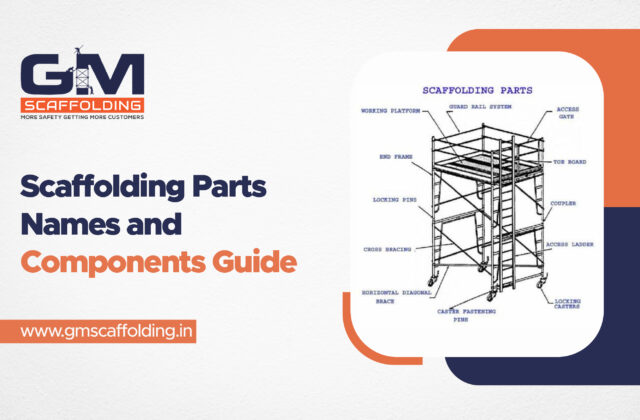
- Scaffolding utilises ledgers, transoms, and diagonal braces for lateral stability
When Should You Use Staging or Scaffolding on a Construction Site?
When to Use Staging on a Construction Site
Construction staging is appropriate when the primary requirement is load-bearing support rather than worker access and movement.
- Casting elevated slabs, beams, or bridge decks with formwork support below
- Supporting hefty precast parts during the placement and alignment procedures
- Temporary support for existing structures during renovation or demolition phases
- Create material staging sections at a set elevation on multi-storey projects
Also Read: https://blog.gmscaffolding.in/scaffold-inspection-checklist/
When to Use Scaffolding on a Construction Site
Scaffolding is the recommended technique for workers who require safe, accessible working platforms at varied heights across the face of a structure.
- Exterior wall construction, brickwork, plastering, and stone cladding operations
- Painting, waterproofing and surface treatment of high-rise building facades
- Window and glazing installation requires accurate, adjustable access levels
Certified suppliers offer IS-compliant scaffolding rental in Coimbatore, together with professional erection teams for residential and commercial applications.
Is Staging the Same as Formwork Support?
Staging and formwork assistance are closely related but not the same. Staging is a broader platform system, while formwork support is a specialised application inside it.
- Formwork support uses staging props and frameworks to hold concrete moulds
- Staging can act as a general work deck, as well as formwork support responsibilities
- Both require load calculations confirmed by a structural engineer before erection
- Prop spacing, plank thickness, and foundation capacity should be site-specifically planned
Conclusion
The staging vs scaffolding distinction is important beyond vocabulary; it influences how your site is structured, how safely your people operate, and how effectively your project timetable is met. Both systems are necessary, but using the right one for the job distinguishes a well-planned site from a reactive one.
Building a solid understanding of staging work in construction, as well as scaffolding needs, ensures better procurement, safer operations, and full compliance with structural and safety regulations throughout the project’s life cycle.
FAQs
What is the difference between staging and scaffolding?
Staging is a temporary platform used to support heavy loads, such as formwork. In contrast, scaffolding is an adjustable framework that allows workers to reach high places safely throughout the construction process.
What is staging in construction?
In construction, staging is a fixed, temporary platform created to bear structural loads, support concrete formwork, or provide an elevated work deck during a predetermined phase of building or civil work.
What is scaffolding used for?
Scaffolding provides secure access at height for workers on jobs such as bricklaying, plastering, painting, cladding, repairs, and window installation on a building’s exterior or interior.
What materials are used for staging and scaffolding?
Both systems employ steel or aluminium tubes, wood or steel deck boards, couplers, and foundation plates. Staging also employs props and stringers for load transfer, whereas scaffolding employs ledgers, transoms, and diagonal bracing components.
Is staging the same as formwork support?
Staging and formwork support are not the same thing. Staging refers to the entire platform system, whereas formwork support is a specialised application in which staging props and frames support concrete moulds during casting and curing.