What is Shuttering in Construction? Types, Materials & Complete Guide
Quick Answer
Shuttering work involves erecting temporary molds of timber, steel, or plywood to hold fresh concrete in shape until it becomes stronger. During shuttering in construction, the mold is placed, concrete is poured, and the structure is stripped once it has cured. This has a direct impact on concrete quality, cost, and job-site safety.
Quick Overview
| Aspect | What You Should Know |
| Definition | Temporary mold to shape and support fresh concrete |
| Common Materials | Timber, plywood, steel, aluminium, plastic |
| Key Purpose | Hold concrete until it achieves load-bearing strength |
| Slab Removal Time | 14–28 days depending on span and concrete grade |
| Related Term | Formwork (broader term); shuttering is a subset |
Table of Contents
- What is Shuttering in Construction?
- Shuttering Meaning in Construction: Breaking It Down
- Difference Between Formwork and Shuttering
- Types of Shuttering Used in Construction
- Shuttering Materials: Which One to Choose?
- Slab Shuttering Removal Time
- How to Calculate Shuttering Work
- Shuttering and Scaffolding: Key Differences
- Conclusion
- FAQs
What is Shuttering in Construction?
A concrete structure cannot be constructed without shuttering work. This is a temporary structure made of wood, plywood, or steel panels that supports freshly poured concrete until it hardens and becomes structurally sound.
The concrete would collapse or deform if the shuttering was not properly erected. Whether it’s a column, beam, slab, or foundation wall, every poured element relies on well-designed shuttering.
According to UltraTech Cement, correct shuttering ensures concrete achieves its intended dimension and load capacity. Poor shuttering is a leading cause of structural failures on construction sites.
→ Always inspect shuttering for alignment and stability before pouring concrete.
Shuttering Meaning in Construction: Breaking It Down
The purpose of shuttering in construction is not simply to form a temporary mold for concrete. The process supports the entire construction process. It involves choosing the right materials, planning how the formwork will be erected and removed, understanding the load it needs to bear, and determining the order of erection and removal. Every step of the process must be handled properly to ensure safety, accuracy, and an excellent finish.
It is important for engineers to understand shuttering meaning in construction in order to prevent delays, rework, and structural defects during the construction process. The term is most commonly used in the South Asian construction industry, whereas the word ‘formwork’ is used more universally throughout the world.
“A shutter isn’t just a mold, it’s a temporary structure that bears concrete loads, ensures dimensions, and specifies the finish.”
→ Train site workers on shuttering terminology to reduce miscommunication and errors.
Difference Between Formwork and Shuttering
Many professionals use these terms interchangeably, but there is a technical difference between formwork and shuttering that every engineer and contractor should know.
| Parameter | Shuttering | Formwork |
| Definition | Mold for concrete element | Complete temporary support system |
| Scope | Narrow – only the mold | Broad, includes props, supports |
| Usage | Common in Indian construction | International terminology |
| Components | Panels, ties, wedges | Shuttering + falsework + props |
In simple terms, shuttering formwork together form the complete temporary system. Shuttering is the facing that touches concrete, while formwork is the total assembly including all supports.
→ Use ‘formwork’ in technical documents; ‘shuttering’ is fine for site-level communication.
Types of Shuttering Used in Construction
It is crucial to choose the right shuttering for quality output and cost efficiency. The type of element used in a project is determined by the project conditions, element shape, and budget constraints.
Timber Shuttering
Traditionally, this type has been most widely used. Due to its flexibility, timber shuttering is a good choice for irregular shapes, as it can be cut and bent easily. There are limitations to its reuse (usually 8 – 12 cycles) as well as the fact that it can absorb water, which can affect the surface’s appearance.
- Small residential projects and irregular shapes are best suited for this product
- This product should be used 8 – 12 times
- The drawback of this product is that it warps when moist; it is labor-intensive
Plywood Shuttering
In comparison with timber, plywood shuttering offers smoother concrete finishes. Slabs and walls are constructed with plywood panels that are waterproof. Designed to be lightweight, cost-effective, and reusable for up to 20-25 times, they are easy to care for.
Steel Shuttering
In terms of durability, steel shuttering is the best choice. Excellent surface finish, high concrete pressure resistance, and 100+ reuses are all advantages of using this product. For large infrastructure projects such as bridges, tunnels, and commercial buildings, steel shuttering is ideal.
- The best application is for large-scale, repetitive structural elements
- It has been reused more than 100 times
- The material is low deflection and has a superior finish.
Aluminium Shuttering
Choosing aluminum shuttering for a mass housing project is a smart choice because they are lightweight, easy to install, and dimensionally accurate. The costs at the beginning are high, but the ROI is substantial on a long-term basis.
Plastic Shuttering
Shuttering made of plastic or PVC is used for small elements. As a result, it is lightweight, corrosion-resistant, and can be repeatedly cast. Columns and small slabs work well, but large load-bearing elements are not recommended.
→ Select steel or aluminium shuttering for repetitive casting to maximize cost savings over time.
Shuttering Materials: Which One to Choose?
Your choice of shuttering material directly affects concrete quality, cost per use, and project timeline. Here is a quick comparison of common shuttering materials:
| Material | Cost | Reuses | Best For |
| Timber | Low | 8–12 | Custom shapes |
| Plywood | Low–Medium | 20–25 | Slabs & walls |
| Steel | High | 100+ | Infrastructure |
| Aluminium | Very High | 250+ | Mass housing |
| Plastic/PVC | Medium | 50–100 | Small elements |
→ Calculate cost-per-use before selecting shuttering material, not just upfront cost.
Also Read: https://blog.gmscaffolding.in/scaffolding-materials-guide-for-construction/
Slab Shuttering Removal Time
One of the most critical decisions on any construction site is when to remove slab shuttering. Removing it too early can cause deflection, cracking, or collapse. Waiting too long increases idle time and delays.
| Structural Element | Minimum Removal Time |
| Walls, columns, vertical faces | 24–48 hours |
| Soffit of slabs (span ≤ 4.5 m) | 7 days |
| Soffit of slabs (span > 4.5 m) | 14 days |
| Soffit of beams (span ≤ 6 m) | 14 days |
| Soffit of beams (span > 6 m) | 21–28 days |
According to IS 456:2000, these timeframes are for ordinary Portland cement at normal temperatures. It is necessary to extend these periods if the concrete is of a lower grade or in a cold climate.
“Never remove slab shuttering based only on calendar days; ensure that concrete has achieved 70% of its design strength through cube testing.”
→ Maintain a shuttering removal register on site to keep track of shuttering dates and cube test results.
How to Calculate Shuttering Work
Accurate calculation of shuttering work helps in budgeting, procurement, and labor planning. The shuttering area is measured in square meters (m²) based on the contact surface between the mold and concrete.
Basic Formula
Shuttering area is usually calculated based on the type of structural element.
For columns and walls, the formula is:
Shuttering Area = Perimeter of the Element × Height
For slabs, the formula is:
Shuttering Area = Length × Width
For example, consider a column with a cross-section of 0.3 m × 0.3 m and a height of 3 m. First, calculate the perimeter:
(0.3 + 0.3 + 0.3 + 0.3) = 1.2 m
Then multiply it by the height:
1.2 × 3 = 3.6 m²
So, the total shuttering area is 3.6 square metres. To estimate the shuttering cost, multiply this area by the shuttering rate per m².
→ Always add 5–10% wastage factor to shuttering material estimates for cuts and overlaps.
Also Read: https://blog.gmscaffolding.in/measuring-buildings-for-scaffolding/
Shuttering and Scaffolding: Key Differences
The purpose of shutters and scaffolding on a construction site may appear similar, but they serve very different purposes. During construction, scaffolding assists workers in reaching different areas safely, while shuttering supports and shapes fresh concrete. If these two terms are used incorrectly, planning errors, incorrect specifications, and serious safety problems can occur.
| Parameter | Shuttering | Scaffolding |
| Purpose | Mold for concrete elements | Access platform for workers |
| Supports | Concrete during curing | Workers, tools, materials |
| Removed When | Concrete gains strength | Work on that level is complete |
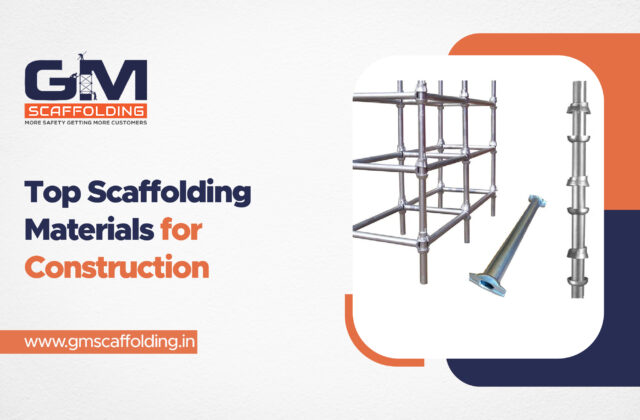
| Material | Timber, plywood, steel, aluminium | Steel tubes, cuplock, aluminium |
Working with reliable scaffolding contractors in Coimbatore ensures safe, compliant temporary works for your project if you need both systems.
→ Coordinate shuttering schedules with scaffolding schedules to avoid congestion on the job site.
Conclusion
Shuttering work is far more than placing planks around concrete, it is a precision process that determines the strength, shape, and quality of your structure. From understanding the difference between formwork and shuttering to selecting the right shuttering material and respecting slab shuttering removal time, every decision matters.
Contractors, site engineers, and procurement professionals benefit from understanding shuttering in construction. The shutters should always be planned as an integral part of the structure rather than being added later.
Are you looking for professional temporary work support? Get in touch with scaffolding and shuttering experts who are familiar with site safety, compliance, and project timelines.
FAQs
1. What is shuttering work in construction?
In construction, shuttering work refers to temporary molds erected to hold freshly poured concrete until it hardens. After concrete reaches sufficient strength, the construction is removed, and the reinforcement is replaced with timber, plywood, steel, or aluminum. In addition, it directly impacts the structural integrity as well as the finish of the building.
2. What is the difference between formwork and shuttering?
Formwork includes shuttering, props, falsework, and bracing. Shuttering generally refers to what contacts concrete, whereas formwork is what supports shuttering. A shuttering system is commonly used in Indian construction; a formwork system is recognised internationally as an entire temporary support system.
3. What materials are used for shuttering in construction?
Shuttering materials include timber, plywood, steel, aluminum, and plastic (PVC). When it comes to small projects, timber and plywood are the most cost-effective materials. Steel and aluminum have a higher reuse value and provide a better surface finish for large, repetitive projects. Concrete materials are selected according to the project scale, the budget, and the desired concrete finish.
4. After how many days can slab shuttering be removed?
Depending on the span and element type, slab shuttering removal can take up to a few hours. After 7 days, remove slabs with spans up to 4.5 m. After 14 days, remove slabs with spans over 4.5 m. After 21–28 days, remove beam soffits above 6 m. According to IS 456:2000, concrete strength should always be confirmed by cube testing before removal.
5. How to calculate shuttering work in construction?
Based on the area in contact with concrete, the shuttering area is calculated in square meters (m2). If you are working with slabs, multiply their length by their width. Columns and walls are measured by multiplying their perimeters by their heights. The wastage factor should be 5–10%. In order to estimate costs, multiply the total area by the applicable rate per square meter.
6. What are the different types of shuttering used in construction?
The most common shutter materials in construction are timber, plywood, steel, aluminum, and plastic. Depending on the project requirements, each type has its own strengths.
Timber is flexible and easy to work with, plywood gives a smooth finish, steel is strong and durable, aluminium is ideal for repetitive use in mass housing projects, and plastic is lightweight and suitable for simple, small-scale work.
The right choice depends on the type of project, its size, the required surface finish, and the available budget.