Ringlock Scaffolding System: Components, Uses & Advantages
Quick Answer
A ringlock scaffolding system is a modular, multi-directional access structure used in construction, industrial, and infrastructure projects. It connects components via a circular rosette node, allowing faster erection, superior load capacity, and adaptability to complex site geometries, making it the preferred choice for modern high-rise and industrial scaffolding needs.
Quick Overview – Ringlock Scaffolding System
| Feature | Detail |
| System Type | Modular scaffolding system with ring connectors |
| Primary Use | High-rise, industrial & complex structure access |
| Key Component | Rosette/ledger ring for multi-directional joints |
| Load Capacity | Up to 70 kN per standard, suited for heavy loads |
| Assembly Speed | Faster than traditional tube-and-coupler systems |
| Safety Standard | Compliant with EN 12811 & OSHA guidelines |
Table of Contents
- Understanding Ringlock Scaffolding Systems and Their Components
- How the Ringlock System Works
- What Are the Uses and Advantages of Ringlock Scaffolding?
- How Can Ringlock Scaffolding Be Used Safely on Construction Sites?
- How to Choose a Ringlock Scaffolding Supplier
- Conclusion
- FAQs
Understanding Ringlock Scaffolding Systems and Their Components
What Is a Ringlock Scaffolding System?
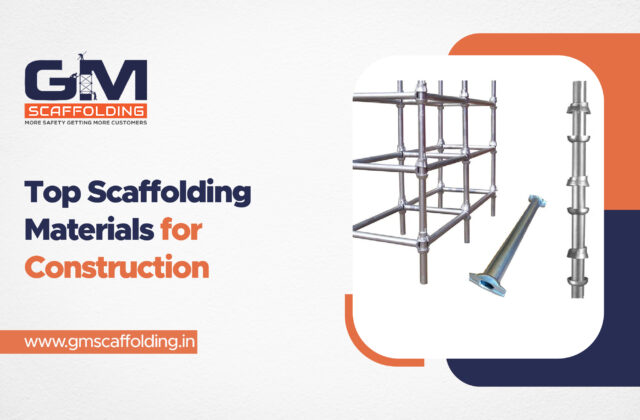
A ringlock scaffolding system, also called a rosette or ringlock scaffold, is a modular access and support structure built around a central ring-shaped connector disc welded onto vertical standards. Unlike older tube-and-coupler scaffolding, ringlock components slot together using a wedge-pin mechanism that locks securely without the need for separate bolts or clamps.
This modular scaffolding system was initially developed in the 1970s and is now widely used across global construction markets for projects requiring speed, strength, and flexibility. It is possible to build scaffold configurations that are suitable for virtually any structure type using the rosette discs, which enable up to eight simultaneous connections.
“Modular scaffolding systems like ringlock can reduce scaffold erection time by as much as 40% compared to traditional tube-and-coupler methods.” – Industry Benchmark Report.
Key Ringlock Scaffolding Components
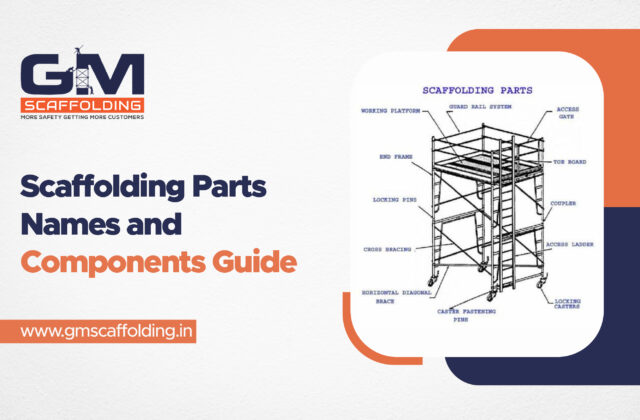
In order for ringlock scaffolding components to be installed in a safe and efficient manner, it is imperative to have a complete understanding of their components. Precision manufacturing assures universal compatibility across the system, with parts manufactured with strict dimensional tolerances. The main components of ringlock scaffolds are as follows:
| Component | Function |
| Vertical Standard | Main upright post with welded rosette discs |
| Horizontal Ledger | Cross-member connecting standards horizontally |
| Diagonal Brace | Adds lateral stability to the scaffold frame |
| Rosette/Ring Node | Central multi-directional connector hub |
| Toe Board | Edge protection to prevent material falling |
| Base Jack | Adjustable base for levelling on uneven ground |
| Decking Platform | Anti-slip steel or aluminium walking platform |
Every component in a quality ringlock scaffolding system is hot-dip galvanised for corrosion resistance, making it suitable for both short-term and long-term outdoor construction environments. Confirm component certifications with your ringlock scaffolding supplier before mobilising to site.
How the Ringlock System Works
The Rosette Connection
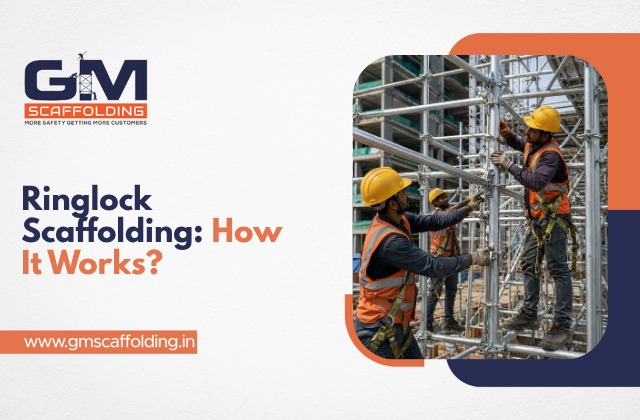
The defining feature of any ringlock scaffold is the rosette, a perforated circular disc welded at fixed intervals along each vertical standard. Ledgers and diagonals terminate in wedge-head connectors that slot into the rosette perforations and are hammered home with a single blow, locking the connection in place.
Using this self-locking system eliminates accidental disconnection. A key safety feature of elevated working platforms is that vertical loads tighten the joint rather than loosen it, thanks to the wedge geometry.
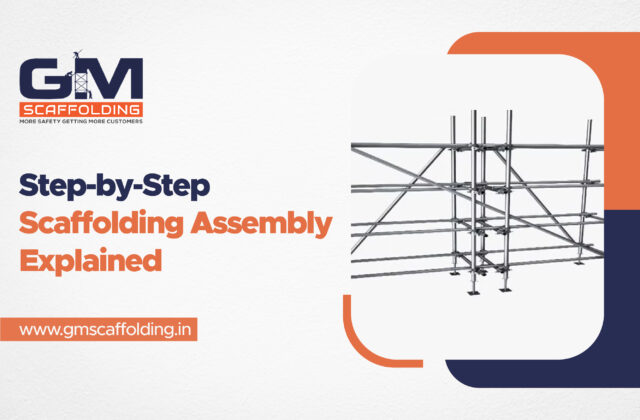
Assembly Process
Ringlock scaffolds are constructed according to a logical, repeatable process:
- Set and level base jacks on a compacted, load-bearing surface.
- Insert vertical standards into base jacks and align plumb.
- Fix horizontal ledgers into rosette discs at the required bay width.
- Install diagonal braces to achieve lateral stability.
- Lay steel decking platforms across ledgers at each working level.
- Fit toe boards and guardrails before any personnel access the platform.
Be sure to follow the scaffold manufacturer’s instructions during erection and drive all wedge pins fully before loading the scaffold.
What Are the Uses and Advantages of Ringlock Scaffolding?
Ringlock Scaffolding Uses
Ringlock scaffolding uses span a broad range of industries and project types. Its multi-directional capacity and modular nature make it equally suitable for straightforward facade work and complex curved structures.
- High-rise building construction – provides certified working platforms at all heights with full EN 12811 compliance.
- Industrial plant maintenance – wraps around pipework, tanks, and process vessels where access is irregular.
- Bridge and infrastructure – supports falsework and formwork during casting of concrete decks and piers.
- Power and petrochemical – handles the strict safety and load requirements of refineries and power stations.
- Renovation and facade – adapts to existing building profiles for cladding replacement and restoration work.
For projects in Tamil Nadu, suppliers offering aluminium scaffolding in Coimbatore can complement steel ringlock systems for lighter-duty, indoor access work where weight is a concern.
Ringlock Scaffolding Advantages
The ringlock scaffolding advantages over conventional systems are significant. When comparing total project costs, labour, material, time, ringlock consistently delivers a favourable return for medium-to-large scale construction.
- Speed of assembly: With fewer components and tool-free connections, assembly time is reduced by 40% when compared to tube-and-coupler systems.
- High load capacity: Rosette connections handle up to 70 kN per standard, suitable for heavy construction loads.
- Versatility: Multidirectional nodes can accommodate irregular, curved, and circular structures.
- Reduced loose parts: The integral wedge-pin connection reduces dropped items and clutter on the job site.
- Long service life: Hot-dip galvanised steel construction resists corrosion for 20+ years of use.
- Lower labour cost: Faster assembly translates directly into reduced man-hours per square metre of scaffold.
Review your project scope and height requirements with a qualified ringlock scaffolding supplier to confirm that the ringlock system is properly specified for your load and geometry.
“OSHA data consistently shows that properly erected modular scaffolding reduces fall-related incidents by up to 30% compared to improvised or poorly-maintained scaffold systems.” – OSHA Training School
How Can Ringlock Scaffolding Be Used Safely on Construction Sites?
Key Safety Standards
In Europe, ringlock scaffolding safety is governed by EN 12811, and in the United States, OSHA 29 CFR 1926 Subpart Q. The Indian standards IS 2750 and the Indian standard IS 3696 are applicable. As a result of compliance with these standards, scaffolds are designed, erected, and inspected to protect workers at height.
Essential Safety Practices
- The design of scaffolds should be based on the results of a thorough site survey and load calculation.
- Use only compatible, certified components from the same modular scaffolding system series.
- Before loading the platform, ensure that all wedge pins are fully driven and visually inspected.
- Install guardrails (≥950 mm) and toe boards on all open sides at every lift level.
- Carry out formal scaffold inspections after erection, after adverse weather, and every 7 days.
- Only trained and competent scaffolders should erect, alter, or dismantle ringlock systems.
How to Choose a Ringlock Scaffolding Supplier
The right ringlock scaffolding supplier directly affects project safety, cost, and schedule. Testing certifications, material data sheets, and support for the entire project lifecycle will be provided by a reputable supplier.
- Ensure hot-dip galvanizing meets ISO 1461 or equivalent national standards.
- Standard, ledger, and decking platform load test certificates should be requested.
- Make sure that the components in the provided system range can be interchanged.
- Check references from comparable construction or industrial projects.
- Assess the supplier’s after-sales support, spare parts availability, and rental options.
Conclusion
The ringlock scaffolding system has established itself as the benchmark for modern construction access, combining the speed of modular assembly with the load capacity demanded by high-rise and industrial projects. Its core ringlock scaffolding components rosette standards, wedge-pin ledgers, and certified decking, work together to deliver a safe, flexible, and cost-effective working platform.
Multidirectional capability and long service life make ringlock scaffolding an excellent choice for bridge construction and petrochemical plant maintenance. When you partner with an independent ringlock scaffolding supplier and follow ringlock scaffolding safety standards, you’ll ensure that every project benefits from all the advantages that come with this proven modular scaffolding system.
FAQs
1. What is a ringlock scaffolding system?
A ringlock scaffolding system is a modular scaffold that uses rosette connectors and wedge-pin joints. It offers fast assembly, high strength, and flexibility for complex structures.
2. What are the main ringlock scaffolding components?
Key ringlock scaffolding components include vertical standards, ledgers, diagonal braces, rosettes, base jacks, and decking platforms. These parts create a stable and secure scaffold structure.
3. What are the key ringlock scaffolding advantages?
Major ringlock scaffolding advantages include quicker installation, high load capacity, and adaptability to irregular shapes. It also reduces labour time and improves site safety.
4. Where are ringlock scaffolding uses most common?
Common ringlock scaffolding uses include high-rise buildings, bridges, industrial plants, and petrochemical facilities. Its modular design suits both access and support applications.
5. How does ringlock scaffolding ensure safety?
Ringlock scaffolding safety relies on self-locking wedge connections, certified components, and proper inspections. Compliance with EN 12811 or OSHA standards further enhances worker protection.
6. Is a ringlock scaffold suitable for curved structures?
Yes, a ringlock scaffold is ideal for curved facades, tanks, domes, and other complex structures. Its multi-directional rosette nodes allow flexible scaffold configurations.