Scaffolding Hazards: Types, Causes & Safety Guide
Quick Answer
A column shuttering is a temporary mould used in construction to hold new concrete until it bScaffolding hazards are dangers that arise from unstable structures, poor assembly, falling objects, electrical proximity, and adverse weather on construction sites. They cause falls, collapses, and electrocution injuries. Prevention requires trained workers, regular inspections, proper PPE, and strict compliance with OSHA scaffolding safety standards.
Quick Overview
| Hazard Type | Why It Matters |
| Falls from Height | Leading cause of construction fatalities |
| Scaffolding Damage | Collapsed structures injure workers & bystanders |
| Electrical Hazards | Proximity to live wires risks electrocution |
| Poor Assembly | Improper setup causes structural failure |
| Weather Conditions | Wind and rain increase fall & collapse risk |
| Untrained Workers | Lack of training leads to unsafe practices |
Table of Contents
- What Are Scaffolding Hazards?
- Types of Scaffolding Hazards
- Common Causes and Importance of Scaffolding Safety
- Scaffolding Safety Precautions & Control Measures
- Worker Training: The Most Effective Control Measure
- Conclusion
- FAQs
What Are Scaffolding Hazards?
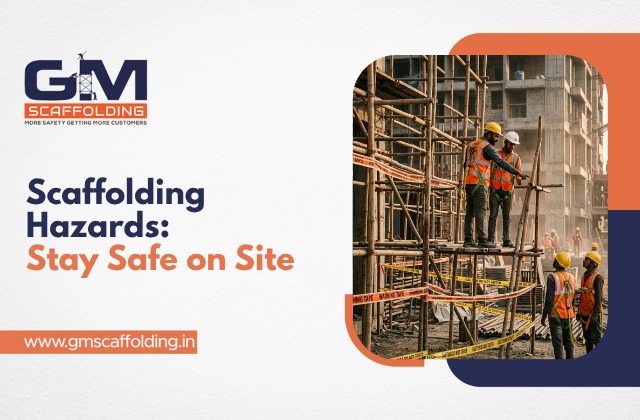
Construction sites rely heavily on scaffolding to give workers access to elevated areas. But with that elevation comes real danger. Scaffolding hazards are risks that can cause serious injury or death when scaffolding is improperly built, maintained, or used.
In the United States alone, scaffolding-related accidents cause approximately 4,500 injuries and 60 deaths annually. Any worker who works on or around scaffolding structures needs to be familiar with scaffolding hazards and control measures.
Whether you are a site supervisor, safety officer, or contractor, recognising these dangers early is the first step to keeping your crew safe.
Types of Scaffolding Hazards
1. Falls from Height
Construction fatalities are primarily caused by falls. Almost every day, scaffolding workers face a high risk of falling. Scaffolding safety precautions like guardrails and personal fall arrest systems are the frontline defence.
- Guardrails must be installed at heights of 6 feet or more (per industry best practice)
- Personal fall arrest systems, harnesses, lanyards, and anchor points are mandatory at many heights.
- Toe boards prevent tools and materials from rolling off platform edges.
Action: Always inspect fall protection equipment before each shift. Never assume it is in place.
2. Why Poor Scaffolding Assembly Is a Hazard
Scaffolding hazards on job sites are often caused by improper assembly, which can be prevented. It is structurally unsound to combine components from different manufacturers, to skip inspection steps, or to rush the installation.
- It is possible for loose planks and unsecured locking pins to collapse under load.
- Mismatched scaffold parts from different systems weaken the entire frame.
- Scaffolding built near power lines increases the risk of scaffold electrocution
What You Can Do to Prevent This Hazard
- Follow manufacturer guidelines for every component
- Ensure all scaffold locks are engaged and verified by a trained erector
- Maintain a minimum 10-foot clearance from live electrical wires (OSHA 1926.451)
- Conduct a visual inspection of wedges, pins, mudsills, and planks before use
3. Why Scaffolding Damage Is a Hazard
Over time, scaffolding components corrode, crack, and deteriorate. Scaffolding damage compromises the structural integrity of the entire system – often without visible warning signs until something gives way.
- Cracked or rotting wooden planks can snap under a worker’s weight
- Rust weakens metal frames and reduces load-bearing capacity
- Damage from nearby equipment – cranes, forklifts – can go unnoticed
Also Read: https://blog.gmscaffolding.in/scaffold-inspection-checklist/
How to Prevent Scaffolding Damage
- Ensure all components are inspected at the beginning of the day and at the end of the day
- If any plank shows visible cracks, deep rust, or is bent, it should be replaced
- Use corrosion-resistant materials in high-humidity environments
- Store scaffold components properly when not in use to prevent weather damage
4. Why Electrical Wires Are a Hazard
Scaffold electrocution is a hidden but deadly risk. Metal scaffolding that contacts or comes too close to overhead power lines can instantly become a conductor, endangering every worker on the structure.
- An electrocution can occur if a person comes into contact with live overhead wires
- Even tools dropped near energised lines can create a dangerous electrical arc
- Wet conditions increase the risk because they improve electrical conductivity
Action: Prior to scaffolding erection, identify overhead electrical hazards, and coordinate with utility companies to de-energize or insulate lines if necessary.
“OSHA requires a minimum 10-foot clearance between scaffolding and any energised electrical line. Lines within 10 feet must be shut off and locked out for the duration of work.”
5. Weather Hazards
Weather hazards are often underestimated on construction sites. Wind, rain, ice, and lightning can quickly turn a compliant scaffold into a death trap for workers.
- High winds cause platforms to sway, increasing fall risk
- Planks and ladder rungs can become slippery after rain
- Footing is dangerous when there is ice on the ground
- Life-threatening lightning strikes can occur on metal structures elevated over the ground
Action: Before starting work, prepare a proper weather monitoring plan. If there are strong winds or heavy rain, scaffold work should be stopped immediately. Once conditions improve, and the surfaces are dry and fully checked, work can safely continue.
Also Read: https://blog.gmscaffolding.in/strategic-use-scaffolding-high-rise-projects/
6. Object Protection Safety – Falling Debris
There is a serious scaffolding hazard posed by falling tools and materials, not just for workers on the platform, but also for pedestrians and colleagues below. The best way to prevent contamination is to adhere to strict housekeeping and containment measures.
- Debris nets and toe boards catch falling objects
- Hard hat zones must be marked and enforced below elevated work areas
- All tools should be tethered or stored securely when not in active use
Common Causes and Importance of Scaffolding Safety
Why Do These Scaffold Hazards Happen?
Understanding the root causes of scaffolding accidents helps safety teams focus on the right solutions. Most incidents usually come down to a few common factors:
- Poor planning: Skipping pre-erection hazard assessments can lead to missed risks on site
- Untrained workers: Working on scaffolds without proper scaffold safety training could result in serious injuries or death
- Time Pressure: Inspections may be skipped due to time constraints or unsafe practices may occur
- Inadequate maintenance culture: Damaged parts are left in service because replacements are not immediately available
Untrained employees are among the highest-risk groups on scaffold-heavy sites. OSHA requires that all scaffold users, erectors, and inspectors receive job-specific training before accessing elevated work areas.
Also Read: https://www.osha.gov/scaffolding
Importance of Scaffolding Safety
Scaffolding safety is about more than just following rules. A strong safety program helps protect lives, keeps projects on track by avoiding delays, reduces the risk of legal issues, and builds trust among workers on site.
- Every scaffolding accident costs an average of $30,000–$150,000 in direct and indirect costs
- OSHA violations for scaffold standards can result in fines of up to $15,625 per violation
- Sites with strong safety cultures report up to 70% fewer lost-time injuries
“Scaffolding safety is not just a legal requirement – it is a moral obligation. Every worker deserves to return home at the end of each shift.”
Scaffolding Safety Precautions & Control Measures
It is important to take a layered approach to scaffolding safety. There is no single step that can eliminate all risks on its own. The best way to achieve safety is to combine strong engineering controls, clear site procedures, and the proper use of personal protective equipment.
Key Safety Measures
| Safety Measure | Action Required |
| Fall Protection | Install guardrails at 6 ft+ heights; use harnesses |
| Regular Inspections | Check planks, pins, and connections daily |
| Electrical Clearance | Maintain 10 ft min. from live power lines |
| Weather Monitoring | Suspend work during high winds or storms |
| PPE Compliance | Hard hats, anti-slip boots, gloves, always |
| Worker Training | Certify all scaffold users before site access |
Preventive Measures for Every Site
Taking preventive measures before construction begins is the most effective method. As part of these procedures, hazard assessments are conducted, competent individuals are appointed to supervise the work, and inspection schedules are maintained. In order to ensure scaffold safety, these preventive measures are essential.
- The scaffold should be erected, inspected, and dismantled under the supervision of a competent person
- Conduct formal inspections before each work shift and after any event (storm, collision, modification)
- Use a scaffold tag system: green for safe use, yellow for restricted use, and red for out-of-service scaffolds.
- When electrical hazards are unavoidable, use nonconductive scaffold components
- Ensure all elevated platforms are equipped with debris nets and toe boards
Explore scaffolding rentals in Coimbatore for flexible, safe scaffolding solutions if you need reliable, compliant scaffolding equipment in Tamil Nadu.
Worker Training: The Most Effective Control Measure
No piece of equipment replaces knowledge. Worker training is consistently cited by OSHA and safety researchers as the single highest-impact intervention for reducing scaffolding accident rates.
Workers who access, erect, or work near scaffolding must complete training in the following areas:
- Identifying physical, electrical, and environmental hazards
- Correct assembly and dismantling procedures per manufacturer specifications
- Fall protection equipment, including harnesses and anchor points, must be used properly
- When a collapse or fall occurs, an emergency response procedure must be followed
- Inspection checklists and reporting protocols for damaged components
Scaffolding safety precautions taught through hands-on training are far more effective than classroom-only instruction. Combine both formats for maximum retention and on-site performance.
Conclusion
Scaffolding hazards are a serious but preventable risk on construction sites. They can range from falls, structural failures, and electrical hazards to the dangers posed by extreme weather. The good news is that each of these risks has practical solutions when proper safety measures are in place.
Construction sites are prone to scaffolding hazards, but these risks can be avoided. The hazards can include falls, structural failures, electrical hazards, and harsh weather conditions. It is possible to control and manage each of these risks effectively by implementing the proper safety measures.
The first step is to conduct a proper site assessment, appoint a competent person to supervise the work, and follow all scaffolding safety precautions throughout the project. Every worker should be able to return home safely at the end of the day.
Frequently Asked Questions
1. What are scaffolding hazards and why are they dangerous?
A scaffolding hazard is a physical, environmental, and operational risk associated with elevated work platforms. As a result, they can cause fatal falls, structural collapses, and electrocution. According to OSHA, scaffold-related incidents cause approximately 4,500 injuries and 60 deaths every year in the US.
2. What are the five main types of hazards in scaffolding?
Scaffold work comes with several serious risks that workers and site supervisors must watch closely. The five main scaffold hazards are:
- falls from height,
- Tools, construction materials, or loose debris can fall from the scaffold and seriously injure workers or people below.
- A scaffold can collapse if it is not assembled correctly, overloaded with materials, or built using damaged or weak components.
- Scaffolds placed too close to live electrical wires create a major risk of electric shock or electrocution for workers.
- Environment-related hazards caused by strong winds, heavy rain, or slippery ice
Each of these hazards requires proper safety controls, regular inspections, and correct use of protective equipment to prevent accidents on site.
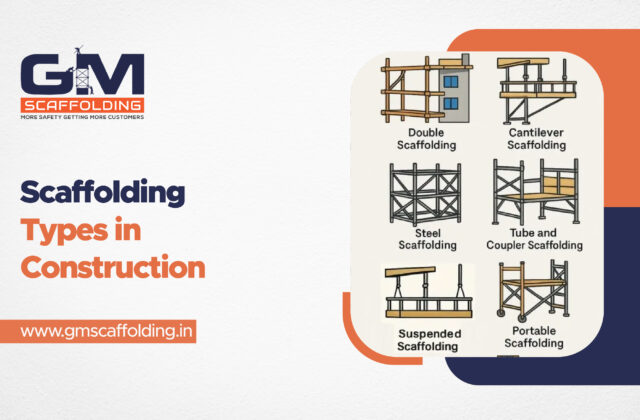
3. What are the 7 types of scaffolding used in construction?
The most commonly used types of scaffolding are:
- tube and coupler scaffolding,
- frame scaffolding,
- system scaffolding,
- suspended scaffolding,
- cantilever scaffolding,
- trestle scaffolding, and
- mobile scaffolding.
Each type is designed for different kinds of work and site conditions, so the safety risks can also vary depending on how and where the scaffold is used.
4. What are the common causes of scaffolding accidents?
Scaffold accidents are often caused by poor scaffold erection by untrained workers, missing or damaged safety systems, overloading the scaffold, and weather conditions such as strong winds or rain.
Another major issue is the failure to carry out proper pre-shift inspections. In many cases, poor planning, rushed schedules, and pressure to finish work quickly become key factors that contribute to scaffold-related incidents.
5. What safety precautions should be followed when using scaffolding?
Scaffolding safety precautions usually involve a few simple but critical practices: adding guardrails on platforms above 6 feet, using personal fall arrest systems, keeping at least 10 feet away from electrical lines, and carrying out daily inspections.
It also includes making sure all workers are properly trained before using the scaffold, and using a scaffold tag system so everyone on site clearly knows whether the structure is safe to use or not.
6. What are the key hazard control measures for scaffolding safety?
In addition to engineering solutions such as guardrails, debris nets, and non-conductive materials, scaffold hazards and control measures include regular inspections, weather safety regulations, scaffold tagging, and wearing personal protective equipment such as harnesses, hard hats, and slip-resistant shoes. Working safely requires scaffolding to be erected and dismantled by someone who is trained and competent.