Modular Scaffolding System: Types, Benefits, Features & Applications

Quick Answer
A modular scaffolding system is a prefabricated, standardised scaffold structure made of interconnecting steel components that enables quick assembly, high load-bearing capacity, and flexible reconfiguration across a variety of site conditions. Ringlock, Cuplock, and Kwikstage systems are common types, each with a unique connecting mechanism and suitability for specific project scales. Choosing the correct modular scaffolding system depends on the project’s height, load requirements, site complexity, and the speed at which the structure must be erected and dismantled.
Quick Overview Table
| Aspect | What It Covers |
| What it is | Prefabricated, interlocking scaffold components |
| Main types | Ringlock, Cuplock, and Kwikstage systems |
| Best for | Facades, industrial sites, repetitive structural bays |
| Key benefit | Faster assembly with consistent load ratings |
| Choosing factors | Load, height, timeline, and site access |
Table of Contents
- Introduction
- What Is a Modular Scaffolding System?
- Modular Scaffolding Applications and Suitable Projects
- Benefits and Efficiency of Modular Scaffolding Systems
- Types of Modular Scaffolds
- Ringlock vs Cuplock vs Kwikstage Scaffolding
- Choosing a Reliable Modular Scaffolding Supplier
- Key Structural Features of Modular Scaffolding
- How to Choose the Right Modular Scaffolding System
- Conclusion
- FAQs
Introduction
Scaffolding has come a long way from rudimentary pole-and-plank arrangements, and modern construction sites rely primarily on prefabricated solutions for speed and safety. A modular scaffolding system replaces custom on-site assembly with standardised, interconnecting components that may be adapted to practically any structure, from a tiny house expansion to a multi-story commercial building. This article describes modular scaffolding, its various varieties, major features, benefits, applications, and how to select the best system for your project.
What Is a Modular Scaffolding System?
It’s a scaffold made of pre-engineered steel components, such as standards, ledgers, and connecting nodes, that can be assembled with standard couplings. This standardisation considerably reduces installation and disassembly time compared to tube-and-clamp scaffolding, while maintaining a high, predictable load capacity after repeated usage. Since every component is built to consistent tolerances, workers spend less time adjusting fits and more time on the actual build.
Modular Scaffolding Applications and Suitable Projects
Common Applications of Modular Scaffolding
Modular scaffolding is widely used for building facades, industrial plant maintenance, bridge construction, and event or stage structures requiring quick setup and disassembly. Its standardised components also make it ideal for repetitive structural bays, such as long building elevations or repeated floor levels, where the same configuration may be cheaply replicated across multiple sites.
Projects That Benefit from Modular Scaffolding
Almost any project that requires repeated assembly, tight timescales, or complex geometry benefits from the standardisation these technologies provide, from commercial towers to industrial retrofits and infrastructure maintenance. Projects that require recurring access, such as ongoing facade inspection or repair, benefit from the system’s reconfigurability rather than being developed from scratch each time.
Benefits and Efficiency of Modular Scaffolding Systems
Common Benefits of Modular Scaffolding Systems
Common advantages of modular scaffolding systems include their standardised design, which accelerates practically every stage of a project from planning to breakdown while also improving consistency across numerous site teams.
- Faster assembly and dismantling than typical scaffolding
- Load ratings are consistent across all connection locations
- Fewer loose fittings reduce the danger of missing components
- Easily adjusts to irregular or complex building shapes
How Modular Scaffolding Improves Construction Efficiency
Standardised components shorten assembly time, minimise the chance of missing or mismatched parts, and allow scaffold workers to move more quickly between structural bays, directly reducing labour hours across a project. Faster erection also results in less time with partially built scaffolding on site, which can improve overall site safety and reduce weather-related delays.
Types of Modular Scaffolds
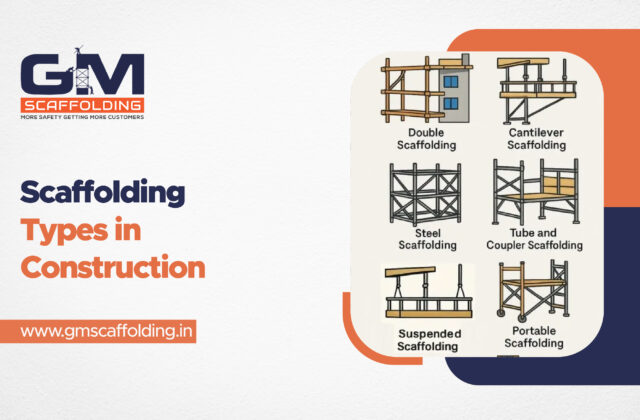
The primary distinction between modular scaffold types is their connection method, which influences construction speed, load capacity, and typical use cases.
Ringlock Modular Scaffolding
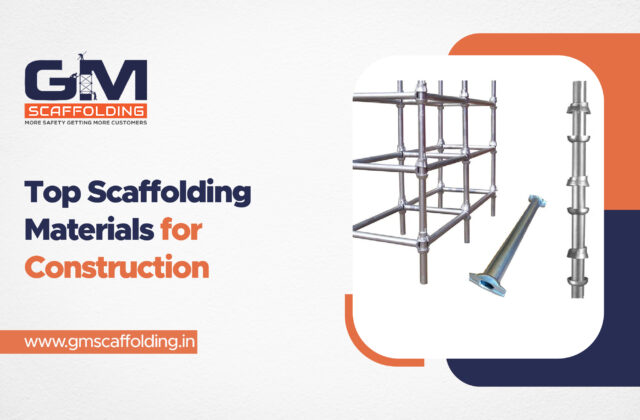
Ringlock scaffolding has a rosette plate welded to the standard and wedge-locking connectors for ledgers and bracing.
- Simple wedge connections allow for extremely fast installation
- High load capacity is suitable for heavy-duty industrial applications
- Flexible node points allow connections at various angles
Cuplock Modular Scaffolding
Cuplock scaffolding has a top-and-bottom cup mechanism that holds ledgers in place around the standard.
- Strong, rigid connectors are appropriate for big loads
- A simple design with fewer loose parts than tube-and-clamp
- Suitable for repetitive structural formwork support
Kwikstage Modular Scaffolding
Kwikstage scaffolding has a wedge-and-blade connecting technique integrated into the standard.
- Quick to erect without requiring separate connection pieces
- Popular for low-to-mid-rise building facades
- A good combination of speed, safety, and affordability in general building
Also Read: https://blog.gmscaffolding.in/scaffolding-safety-standards-every-construction-site-needs/
Ringlock vs Cuplock vs Kwikstage Scaffolding
Ringlock vs Cuplock vs Kwikstage scaffolding comes down to balancing assembly speed, load capacity, and normal application.
| System | Best Suited For |
| Ringlock | Heavy industrial loads, complex geometry |
| Cuplock | Repetitive formwork, mid-to-heavy loads |
| Kwikstage | General construction, facades, faster jobs |
Choosing a Reliable Modular Scaffolding Supplier
Sourcing high-quality components is as important as selecting the correct system type, because inconsistent or poorly maintained components degrade the system’s intended reliability. GM Scaffolding, a modular scaffold manufacturer, provides manufacturing and supply support to contractors seeking durable, code-compliant components for Ringlock, Cuplock, and Kwikstage systems.
Key Structural Features of Modular Scaffolding
Modular scaffolding’s key structural elements include standardised connection nodes, uniform load ratings, and components designed for multiple assembly cycles without performance loss. These elements work together to make the system more consistent across crews, sites, and project types.
- Standardised node spacing allows for predictable, reproducible configurations
- Galvanised steel structure for corrosion resistance
- Compatible attachments include toe boards, guardrails, and stairways
- Load-rated components are tested to the applicable safety standards
Also Read: https://blog.gmscaffolding.in/guardrail-in-scaffolding/
How to Choose the Right Modular Scaffolding System
Choosing the proper system begins with understanding your project’s height, load, and timeline requirements, rather than simply relying on the system your team is most familiar with.
- Match load capacity with the heaviest projected working load
- Consider assembly speed if deadlines are tight
- Consider site access and accessible storage and transportation space
Consult suppliers such as aluminium scaffolding in Coimbatore for relevant accessories.
Conclusion
A modular scaffolding system is a faster, safer, and more predictable alternative to traditional tube-and-clamp scaffolding, especially for projects with repeatable structures or short deadlines. Understanding the distinctions between Ringlock, Cuplock, and Kwikstage systems enables contractors to select the best modular scaffolding system for their unique site requirements and crew experience.
Whether you source locally through scaffolding in Erode or engage a professional supplier, investing in the right system pays off in speed, safety, and cost throughout a project.
FAQs
1. What is a modular scaffolding system?
A modular scaffolding system is a prefabricated scaffold made of standardised, interlocking steel components that assemble quickly without traditional coupling fittings. It provides constant load ratings and is faster to install than tube-and-clamp scaffolding.
2. What are the main types of modular scaffolding?
Ringlock, Cuplock, and Kwikstage scaffolding are the three basic varieties, each with a unique connecting method and suitability for differing load capacities, assembly speeds, and project types.
3. What is the difference between Ringlock and Cuplock scaffolding?
Ringlock uses a rosette plate with wedge-locking connections, providing flexible multi-angle connections and a high load capacity. In contrast, Cuplock employs a top-and-bottom cup mechanism better suited to repetitive, stiff formwork support.
4. What are the benefits of modular scaffolding systems?
Advantages over traditional scaffolding technologies include faster assembly and takedown, constant load ratings, fewer loose components, and easier adaptation to irregular or complex building designs.
5. Where is modular scaffolding commonly used?
It is often utilised for building facades, industrial plant maintenance, bridge construction, event structures and any project requiring repeating structural bays or short assembly times.
6. How do you choose the right modular scaffolding system?
Consider your project’s load requirements, height, assembly timetable, and site access, and then match them to the strengths of Ringlock, Cuplock, or Kwikstage systems.