Brace Scaffolding: Types, Installation & Safety
Quick Answer
Understanding how to brace scaffolding is essential for every construction professional. Scaffolding bracing refers to diagonal, cross, or horizontal members added to a scaffold frame to resist lateral forces,including wind and dynamic loads. Without proper bracing, even a well-built scaffold can sway, tilt, or collapse, putting workers and materials at serious risk.
Quick Overview
| Bracing Type | Primary Function | Best Used For |
| Cross Bracing | Resists racking and sway | Frame & modular scaffolding |
| Diagonal Bracing | Adds stiffness to bays | Irregular or industrial sites |
| Horizontal Bracing | Distributes load evenly | Multi-level high-rise access |
| Facade Bracing | Fights wind pressure | Tall exterior scaffolds |
| Plan Bracing | Stabilizes top-level plan | Towers and mobile rigs |
Table of Contents
- What is Bracing in Scaffolding?
- Why Bracing Matters – External and Internal Forces
- Scaffolding Bracing Types Explained
- Bracing Installation Process – Step by Step
- Common Bracing Mistakes to Avoid
- Bracing and Wind Load Resistance
- Bracing in Mobile Scaffold Towers
- Inspection of Bracing Components
- Scaffolding Bracing for High-Rise & Industrial Projects
- Conclusion
- FAQs
What is Bracing in Scaffolding?
In construction, brace scaffolding refers to the structural members, diagonal tubes, cross-bars, or horizontal ties, installed within a scaffold frame to keep it stable. These components connect vertical standards and horizontal ledgers, locking the entire structure against sideways movement. Without them, scaffold frames act like a loose chain with no fixed angles.
Bracing converts a flexible, multi-jointed structure into a rigid, load-bearing system. It is not optional; in most territories, bracing is mandated by construction safety standards such as IS 2750 in India or OSHA 1926.451 in the USA. Think of it as the skeleton that holds the scaffolding upright under stress.
Action: Always consult your scaffold design engineer before finalising bracing positions for any project above two working levels.
Why Bracing Matters – External and Internal Forces
A scaffold faces two categories of forces every working day: external forces (wind, rain, seismic vibrations) and internal forces (live loads from workers, equipment weight, and impact from dropped tools). Both categories push, twist, and bend the structure continuously. This is why bracing is non-negotiable on any project of scale.
According to OSHA, scaffolding accidents account for 4,500 injuries and 50 deaths every year in the USA alone. Proper bracing could prevent a significant portion of these incidents.
Bracing addresses all of these risks by distributing stress across multiple members. It prevents a single point of failure from causing a progressive collapse. On high-rise or windy coastal sites, the lateral load on the scaffold can exceed the vertical load,making bracing the most critical safety element on the site.
Scaffolding Bracing Types Explained
Choosing the right scaffolding bracing type depends on your site conditions, scaffold height, and load requirements.
1. Cross Bracing
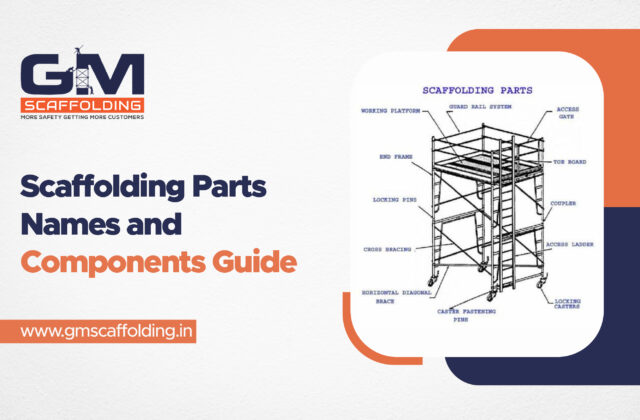
The cross brace is made up of two diagonal members that are fixed between vertical frames in an “X” shape. Generally, it provides strong stability in both directions, helping to control movement and prevent swaying. As a result, the scaffold becomes more rigid and secure. A wide range of applications includes frame and modular scaffolding systems, especially in mid- and high-rise construction.
2. Diagonal Bracing
The diagonal bracing is formed by a single diagonal member fixed between the vertical posts. It increases the rigidity of each scaffold bay even without the need for a matching brace on the opposite side. The type of brace is useful in irregular structures, scaffolding in industrial plants, and other areas in which cross-bracing is difficult due to space, access, or equipment limitations.
3. Longitudinal Bracing
Runs along the longer axis of the scaffold. Longitudinal bracing resists fore-aft rocking, which is common in long scaffold runs along building facades. It is typically used in combination with transverse bracing for full three-dimensional stability.
4. Transverse Bracing
Positioned along the shorter dimension (width) of the scaffold. Transverse bracing resists side-to-side movement perpendicular to the building face. On narrow-bay scaffolds, transverse bracing is especially critical because the width-to-height ratio is unfavourable.
5. Horizontal (Plan) Bracing
Plan bracing is fixed horizontally at the top or at intermediate levels of a scaffold tower. Its main role is to hold the structure firmly in place when viewed from above and stop it from twisting, especially at the top. This is very important for tall, free-standing towers, where rotation can lead to instability. Plan bracing is commonly used in mobile scaffold towers and independent tied scaffolds to improve overall stability.
6. Facade Bracing
Applied along the exterior face of tall scaffolds. Facade bracing resists outward bulging and is the primary defence against wind pressure on open-air high-rise projects. It is particularly important on coastal or elevated construction sites where wind speeds are high.
| Brace Type | Direction Resisted | Typical Application |
| Cross Brace | Lateral (both) | Frame scaffolding |
| Diagonal Brace | Lateral (one side) | Industrial / irregular sites |
| Longitudinal Brace | Fore-aft | Long facade runs |
| Transverse Brace | Side-to-side | Narrow-bay scaffolds |
| Plan / Horizontal | Rotational | Mobile towers |
| Facade Brace | Wind pressure | High-rise exteriors |
Bracing Installation Process Step by Step
A correct bracing installation process follows a defined sequence. Skipping steps or using wrong components is a leading cause of scaffold failure on site.
- Step 1 – Plan: Before erection, review the scaffold design drawing and mark all bracing positions.
- Step 2 – Base setup: Before bracing is installed, make sure the base jacks and sole boards are correctly positioned.
- Step 3 – Diagonal bracing first: Install diagonal braces as each lift is erected do not wait until the full scaffold is assembled.
- Step 4 – Secure with fittings: Use proper swivel or right-angle couplers. Never use wire or rope as a substitute for standard fittings.
- Step 5 – Check angles: Ideal brace angle is between 35° and 55° to the horizontal. Right angles offer the most efficient load transfer.
- Step 6 – Horizontal bracing: Fit plan bracing at every third lift or as specified by the design.
- Step 7 – Inspect before use: A competent person must check all bracing before the scaffold is handed over for use.
Action: Always install bracing progressively as you erect, never as an afterthought once the scaffold is at full height.
Also Read: https://blog.gmscaffolding.in/types-of-scaffolding-in-construction/
Common Bracing Mistakes to Avoid
Even experienced erectors make mistakes with bracing. These are the most costly errors seen on construction sites across India and internationally.
- Missing braces in lower lifts: Many teams skip bracing at lower levels, assuming height alone drives the risk. All levels need bracing.
- Wrong coupler type: Using a putlog coupler where a swivel or right-angle coupler is required reduces load capacity by up to 50%.
- Improper angle: Braces placed at very shallow or steep angles are far less effective. Always target 35°–55°.
- No plan bracing on towers: Neglecting horizontal plan bracing on tall towers is a common cause of rotational collapse.
- Not re-checking after modifications: If platform heights are adjusted or boards moved, bracing must be re-evaluated.
Bracing and Wind Load Resistance
Wind is the dominant lateral force on most scaffolding structures. As scaffold height increases, so does wind pressure, and the relationship is not linear. On a 20-metre-high scaffold, wind load can be four times greater than at 5 metres. This is why scaffolding bracing types like facade bracing and cross bracing must be installed at calculated intervals, not by guesswork.
In high-wind zones or during monsoon season in India, scaffolding must be designed for wind speeds of up to 50 m/s. Ensure your scaffold contractor provides a wind-load calculation certificate before work begins on any structure above 10 metres.
Wind-induced scaffold failures increase by over 60% during the monsoon season in South India, according to construction safety audits across major metro projects.
Bracing in Mobile Scaffold Towers
Mobile scaffold towers present unique bracing challenges. Because they move, their bracing must maintain rigidity without being permanently anchored to a wall. Plan bracing at the top level is mandatory, it prevents the tower from racking as it is moved across uneven floors. Diagonal bracing must be installed on all four faces of a mobile tower, unlike wall-mounted scaffolds where internal faces may be omitted.
Action: Always lock all castors before working on a mobile tower, and re-inspect all bracing couplers after each relocation.
Inspection of Bracing Components
Regular inspection is the final line of defence. Every brace scaffolding component should be checked at three stages: before erection, after every significant weather event, and at handover before the scaffold is used. Look for bent or deformed tubes, loose couplers, missing pins, and corrosion on swivel joints.
Document every inspection using a formal scaffold inspection register. In Tamil Nadu and other Indian states, a registered scaffolding contractor must sign off on all inspections for scaffolds over 5 metres in height.
If you need reliable scaffolding solutions with properly braced systems in South India, consider sourcing from a trusted provider. For example, scaffolding rental in Coimbatore providers offer pre-inspected, standards-compliant equipment ready for high-rise and industrial use.
Scaffolding Bracing for High-Rise & Industrial Projects
Both scaffolding bracing for high-rise projects and scaffolding bracing for industrial projects demand engineered solutions rather than standard site practice. High-rise facades require facade bracing at every 4 metres of height, supplemented by ties to the building at maximum 4-metre intervals horizontally. Industrial plants add the challenge of live loads from pipes, vessels, or cranes operating near the scaffold.
For industrial projects, ensure that bracing is designed by a structural engineer who accounts for vibration loads from nearby machinery. Always demand a load-rated scaffold design certificate before commencing work on any industrial plant scaffold above 6 metres.
Action: Choose the right bracing type for the site. For high-rise buildings, use cross- and facade-bracing; for complex industrial layouts, use diagonal and longitudinal bracing.
Conclusion
Brace scaffolding is not something to be treated as a finishing touch; it is a basic safety requirement from the very first level of erection to the final stage of dismantling. Knowing the different scaffolding bracing types, how each one handles different forces, and how to install them correctly plays a key role in keeping the structure safe and stable.
The choice of bracing system is an important part of scaffold design, whether it’s for a high-rise residential building or a complex industrial site. As a result, safety, stability, and the performance of the site are directly affected.
You should hire a scaffold contractor who is certified, ensure scaffolds over 5 metres have a design certificate, and inspect bracing components during every stage of the project. It’s important to brace your project appropriately to prevent deaths, reduce liability, and keep it on schedule.
Frequently Asked Questions
1. What is bracing scaffolding?
The term “bracing” refers to the installation of diagonal, cross, or horizontal structural members on scaffolding to prevent lateral movement. As a result of these braces, scaffolds remain stable no matter what the load is, including static loads and dynamic loads, such as worker movements and material weights.
2. What is the purpose of bracing?
The main purpose of bracing is to protect the scaffold from side and diagonal forces that can make it sway, bend, or collapse. It helps share the load across different parts of the scaffold, keeps the structure straight and balanced, prevents parts from bending under pressure, and allows workers and materials to be supported safely during the project.
3. What are the 8 types of scaffolding?
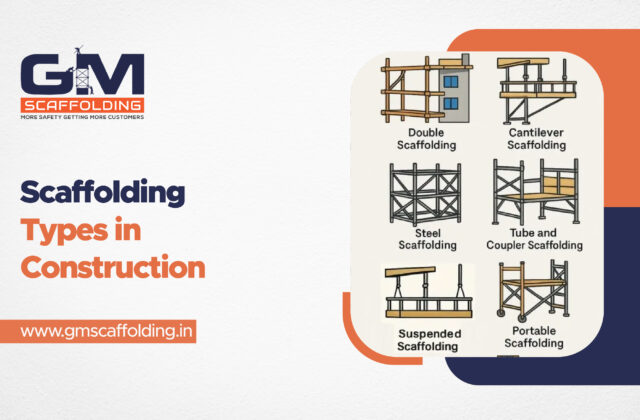
The eight common types of scaffolding used in construction are: (1) Tube and Clamp, (2) Frame Scaffolding, (3) Cuplock / Ringlock, (4) Suspended Scaffolding, (5) Mobile Tower Scaffolding, (6) Cantilever Scaffolding, (7) Trestle Scaffolding, and (8) Patented Scaffolding. Each type has its own design and support system, so the bracing arrangement changes depending on how the scaffold carries loads and stays stable.
4. What is the difference between scaffolding and bracing?
A scaffold is a temporary structure used to provide access to workers and materials during construction. There are many parts contained in it, including standards, ledgers, transoms, platforms, and guardrails. The scaffold’s bracing keeps the structure stable and prevents it from moving or swaying sideways. In simple terms, scaffolding forms the structure and bracing keeps it steady and secure.
5. How many types of bracing are there?
A scaffold is braced in six ways: cross bracing, diagonal bracing, longitudinal bracing, transverse bracing, horizontal bracing, and facade bracing. There are also references that classify dog-leg bracing as a seventh type, which is mainly used in access configurations such as swimming pools, stairs, and skip-bays.
6. What is the strongest type of bracing?
Cross bracing is widely considered the strongest type of scaffolding bracing because it provides bilateral lateral resistance,it resists sway in both directions simultaneously using the same pair of members. When used with correct angles (35°–55°) and proper couplers, cross bracing delivers the highest level of rigidity per unit of material used on a scaffold frame.