Scaffolding for Demolition: Requirements, Safety and Best Practice

Quick Answer
Scaffolding for demolition provides workers with controlled access to elevated areas while helping separate work zones from falling debris and other hazards. Unlike ordinary construction scaffolding, demolition work can change the loads and conditions around the scaffold as the building comes down. Regular inspections, secure ties, debris protection, safe access and changing the scaffold plan when conditions change are essential.
Quick Overview
| Thing | Why it matters |
| Scaffold design | Matches changing demolition conditions |
| Debris protection | Reduces falling-object risks |
| Scaffold ties | Helps maintain stability |
| Load control | Prevents excessive loading |
| Safe access | Gives workers controlled entry |
| Inspections | Detects damage and instability |
Table of Contents
- Introduction
- Demolition Scaffolding Systems and Planning
- Protecting the Scaffold From Demolition Debris
- Demolition Scaffold Safety, Stability and Access
- Common Safety Risks of Demolition Scaffolding
- Conclusion
- FAQs
Introduction
Demolition work involves changing structural conditions, falling materials, restricted access and temporary work areas, making safe access planning especially important. Scaffolding for demolition must be selected and maintained according to the building condition, demolition sequence, expected loads and surrounding hazards. Proper planning helps provide workers with controlled access while supporting debris protection, scaffold stability and safe working platforms throughout the demolition process.
Demolition Scaffolding Systems and Planning
Why Scaffolding Is Used During Demolition
Demolition is not simply construction in reverse. As walls, floors and other parts of a building are removed, the structure changes around the workers. Access routes can disappear, loads can shift and areas that were stable earlier in the day may no longer be suitable.
Demolition scaffolding can provide access to upper sections, exterior walls and other areas that workers need to reach safely. It can also support controlled working platforms and, where designed for it, help provide protection from smaller falling objects.
The scaffold needed will depend on the building and how the demolition is being carried out. A small, low-rise building may only need a basic access setup, while a taller structure can require a more detailed temporary works plan, especially when access, stability and changing structural conditions are involved.
Scaffolding may be used for several tasks during a demolition project, including:
- Providing access for workers carrying out manual demolition
- Reaching external walls and removing finishes
- Supporting masonry and concrete removal work
- Giving workers access to hard-to-reach areas for inspection
- Creating safer access around upper floors
- Supporting screens or other measures used to control debris
OSHA requires an engineering survey by a competent person before demolition begins to assess the condition of framing, floors and walls and the possibility of an unplanned collapse.
Action point: Treat scaffold planning and demolition planning as connected activities from the start.
Choosing a Demolition Scaffolding System
The scaffold system should fit the building, demolition method and available space. There is no advantage in choosing a familiar system if it does not suit the structure or the work sequence.
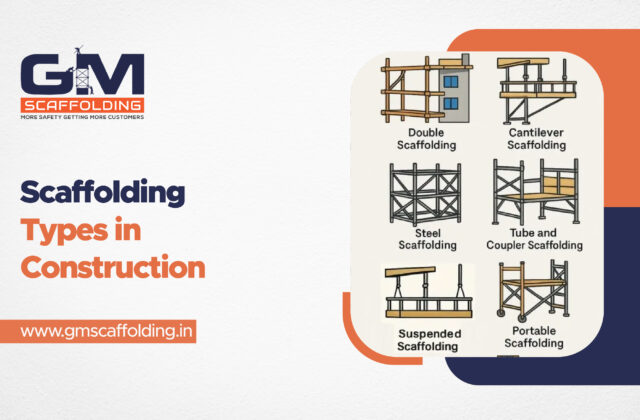
Supported scaffolds
Supported systems are commonly considered where there is suitable ground or another properly designed support point. Frames, tubes and couplers or other scaffold components can be arranged around the building to create working platforms at different levels.
The important part is not simply putting up enough frames. The scaffold needs adequate support, bracing and restraint for the conditions in which it will be used.
Specialised access systems
Some demolition sites have restricted ground access, nearby structures or limited space around the building. In these cases, a conventional arrangement may not be practical.
Depending on the project, suspended platforms, cantilevered arrangements or other specialised access systems may be considered. These require project-specific planning because the supporting structure and expected loads become particularly important.
Action point: Choose the scaffold around the demolition method and actual site conditions. The fact that a particular system is readily available does not necessarily mean it is suitable for the job.
Info gain: OSHA requires scaffolds and their components to support their own weight plus at least four times the maximum intended load. The scaffold should also never be loaded beyond its rated capacity or intended load, whichever is lower.
Planning Before Demolition Starts
Before scaffolding for demolition work is erected, the team needs a clear picture of how the building will be taken apart. The scaffold may sit close to walls that are being removed, so the demolition sequence can directly affect its stability and access.
Important planning points include:
| Planning factor | What to consider |
| Building condition | Weak, damaged or unstable areas |
| Demolition sequence | Which sections are removed first |
| Scaffold position | Distance from demolition activities |
| Ties | Where secure connections can be maintained |
| Loads | Workers, tools and accumulated debris |
| Access | Ladders, stairways or other routes |
| Debris | Screens, nets or controlled drop zones |
| Surroundings | Roads, neighbouring structures and utilities |
The scaffold plan may also need to show where materials are removed and how debris is handled. Allowing broken masonry or other waste to build up on a platform can create a load that was never considered during the original design.
OSHA also requires utilities to be shut off, capped or otherwise controlled before demolition begins, unless they need to remain operational and are appropriately relocated or protected.
Action point: Map the demolition sequence against the scaffold layout before erection begins.
Also Read:
https://blog.gmscaffolding.in/poor-scaffolding-planning/
Protecting the Scaffold From Demolition Debris
One of the biggest differences between ordinary construction work and demolition is the amount and nature of falling material. Brick fragments, concrete pieces, timber and other debris can strike the scaffold, workers or people below.
For debris protection scaffolding, the right solution depends on the size and potential impact of the material. Screens, toeboards, debris nets, catch platforms and canopies may be used where appropriate. Lower-level areas may also need barricading so workers are not exposed to falling objects.
OSHA specifically identifies toeboards, screens, debris nets, catch platforms and canopy structures as possible forms of falling-object protection for scaffold users, depending on the hazard.
Protection should not be treated as a substitute for controlling the demolition itself. Large or heavy materials may need to be kept away from edges and handled through a planned removal method.
Action point: Match the debris-control method to the size, weight and likely path of falling materials.
Demolition Scaffold Safety, Stability and Access
Scaffold Stability and Load Control
During demolition, scaffold stability deserves extra attention because the building itself is changing. Ties may become unavailable when walls are removed, while vibration, impact or accidental contact can also affect the arrangement.
A scaffold that was secure in the morning may need to be reviewed after a major section of the building has been removed. This is especially important where scaffold ties connect to structural elements that are part of the demolition sequence.
Materials should also be kept under control. Workers should not use platforms as convenient storage areas for broken concrete, bricks or removed fixtures.
Action point: Reassess ties, bracing and expected loads whenever the demolition sequence changes.
Access and Working Platforms
Good demolition access scaffolding should give workers a practical route to their work area without forcing them to climb through unsuitable parts of the building.
Depending on the arrangement, access may be provided through ladders, stair towers, ramps, walkways or direct access from another suitable surface. OSHA specifies access requirements for scaffolds, including situations where platforms are more than two feet above or below a point of access.
Platforms also need enough space for workers to perform the job without becoming overcrowded with tools and materials. As demolition progresses, access points may need to move or be removed.
Action point: Check access routes after each major stage instead of assuming the original route will remain usable.
Inspections During Demolition
Regular inspection becomes particularly important when scaffold safety during demolition is involved. The surrounding structure, scaffold ties and work loads can all change as the project progresses.
OSHA requires scaffolds and components to be inspected for visible defects by a competent person before each work shift and after an occurrence that could affect structural integrity. Damaged or weakened components must be repaired, replaced, adequately braced or removed from service.
Inspections should look beyond obvious broken components. The team should also consider changes in the building, missing ties, altered access, accumulated debris and signs that the scaffold has been struck or disturbed.
Action point: Inspect the scaffold whenever the demolition process creates a new condition that could affect its stability.
Common Safety Risks of Demolition Scaffolding
Temporary scaffolding for demolition can introduce several hazards if the system is not kept aligned with the demolition plan.
The main risks to watch for include:
- Falling debris hitting workers or damaging the scaffold
- The scaffold becoming unstable as parts of the building are removed
- Platforms carrying more waste or materials than they are designed for
- Scaffold ties being removed, damaged or changed during demolition
- Unsafe access routes
- Falls from open platforms
- Contact with nearby utilities
- Damage caused by demolition equipment
- Poorly controlled lower-level work zones
- Changes to the building that were not reflected in the scaffold plan
Fall protection should always be part of the scaffold setup. OSHA requires suitable fall protection for workers using scaffolds more than 10 feet above a lower level.
Contractors handling local demolition projects can also approach scaffolding in tirupur providers for access solutions that match the site’s layout, work requirements and safety needs.
Action point: Review the scaffold whenever the building, work method, loading or access conditions change.
Conclusion
Scaffolding for demolition has to keep pace with the building as it changes. A scaffold that is suitable at the beginning of a project may need adjustment after walls, floors or other structural elements are removed. Careful planning, controlled loading, debris protection, safe access and frequent inspections help keep the temporary structure suitable throughout the demolition process.
FAQs
1. Is scaffolding required for demolition work?
Not every demolition job needs scaffolding. The decision usually comes down to the building’s height, where workers need to work, the access available and how the demolition will be carried out. If workers need to reach elevated areas safely, a suitable scaffold or another access system may be necessary after assessing the site and applicable safety requirements.
2. What type of scaffolding is used during building demolition?
Supported scaffolds are commonly used where suitable ground support is available. Depending on the building and site, other arrangements such as suspended or specialised access systems may also be considered. The system should be selected based on the demolition sequence, working height, loads, available support and surrounding hazards.
3. How is scaffolding protected from falling demolition debris?
The type of protection depends on what could fall from the building. Screens, toeboards, debris nets, catch platforms or canopies may be used to reduce the risk. Areas below may also need to be barricaded so people stay clear. For larger or heavier debris, a proper removal plan is needed rather than relying on the scaffold alone.
4. How often should demolition scaffolding be inspected?
The scaffold needs to be checked regularly, based on the site conditions and the safety requirements that apply. OSHA requires a competent person to inspect it before each work shift and after anything that could affect its stability. Since demolition can change the site quickly, another inspection is needed whenever the scaffold or surrounding structure is altered.
5. What are the main risks of scaffolding during demolition?
Typical hazards include falling debris, an unstable scaffold, overloaded platforms, damaged parts, missing ties and unsafe access. Falls from platforms are another concern. The risk can increase when walls or floors supporting scaffold ties are removed during demolition. Regular inspections and good coordination between the demolition crew and scaffold team can help keep these hazards under control.