Scaffolding Work in Construction: Meaning, Process, Uses and Safety
Introduction
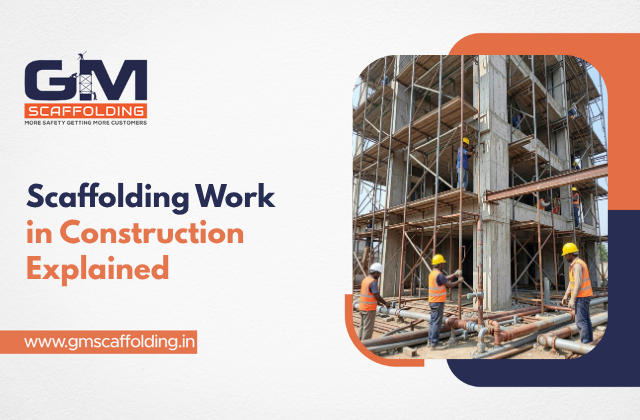
If you’ve ever walked past a building under construction, you’ve almost certainly noticed those metal frameworks wrapped around the structure. That’s scaffolding, and the scaffolding work happening on those structures is far more critical than most people realise. Without it, completing large-scale construction safely and efficiently would simply not be possible.
Whether you’re a contractor managing a project, a site supervisor overseeing a crew, or a student trying to understand the basics of civil construction, knowing how scaffolding works from setup to safety is essential knowledge. Let’s break it all down in a way that’s easy to follow.
Scaffolding Work in Construction: Types, Uses, and Importance
What Is Scaffolding Work?
Scaffolding work refers to the process of erecting, using, and dismantling temporary structures that support workers and materials during construction, maintenance, or repair activities. This working platform scaffolding system allows crews to access heights and areas that would otherwise be unreachable.
Scaffolding means in construction providing a safe and stable elevated work environment. You can’t just reach high places; you also have to do so without endangering your life. As the construction process progresses, scaffolding must be strong enough to hold workers, tools, and materials at once, as well as remain stable.
Types of Scaffolding Used in Construction
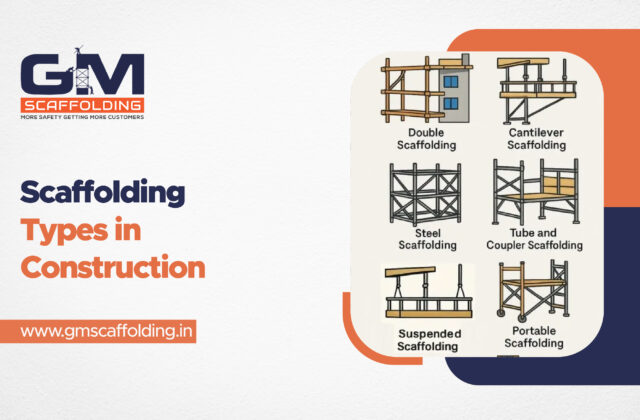
Not all scaffolding looks the same or works the same way. The type you use depends heavily on the nature of the project, the site conditions, and the height involved. Here are the most common types used in construction scaffolding today:
- Tube and Coupler Scaffolding – Using steel tubes and couplers, this scaffolding system can be highly flexible. Complex structures frequently use this type of material.
- Cuplock Scaffolding – A modular system that allows quick assembly and disassembly. Ideal for large projects.
- Suspended Scaffolding – Hung from the top of a building using ropes or chains. Used for exterior finishing work.
- Mobile Scaffolding – Mounted on wheels for easy movement. Best for interior work that requires frequent repositioning.
- Single and Double Scaffolding – Traditional systems used for brick and masonry work respectively.
Also Read: https://blog.gmscaffolding.in/how-scaffolding-speeds-up-projects/
How Scaffolding Works: Step-by-Step Setup Process Explained
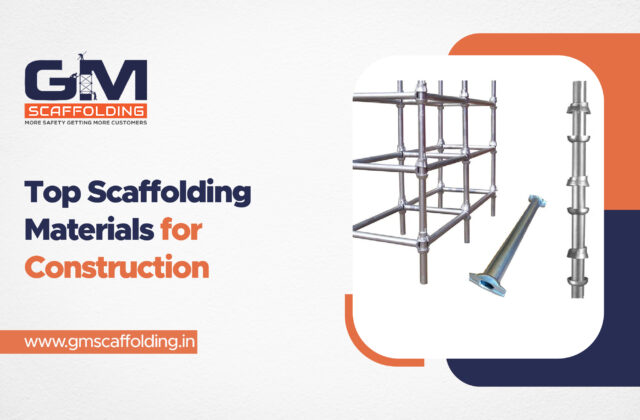
Construction Scaffolding Material: What Goes Into It?
The quality of construction material directly impacts the safety and durability of the entire setup. When materials are used incorrectly or substandardly, they can lead to catastrophic failures on the jobsite.
Typical scaffolding systems include:
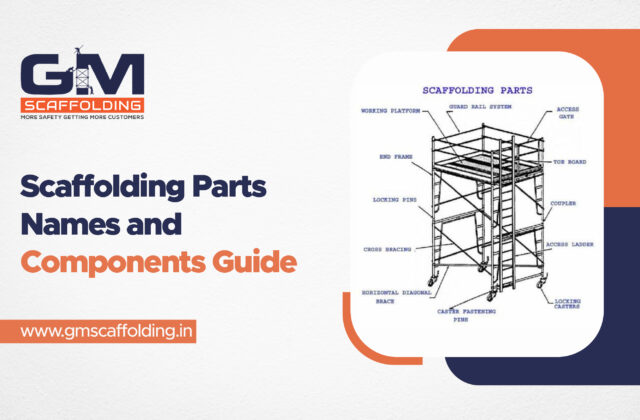
- Standards (Uprights): Vertical tubes that carry loads from the platform to the ground.
- Ledgers: Parallel tubes running along the face of the building.
- Transoms: Tubes placed at right angles to ledgers to support the working platform.
- Scaffold Boards/Planks: These are made of wood or steel and provide the actual working surface.
- Couplers and Clamps: These are used to connect tubes securely at various angles.
- Base Plates and Sole Boards: Distribute the load at the base to prevent sinking.
Steel and aluminium are the most commonly used materials, each offering strength and varying degrees of weight. Bamboo scaffolding is still used in some parts of Asia, but it’s less common in industrial projects.
How Does Scaffolding Work: The Setup Process
Engineers and site supervisors can plan projects more efficiently if they understand how scaffolding works in practice. To simplify the process, here are the steps:
Step 1: Site Assessment and Planning
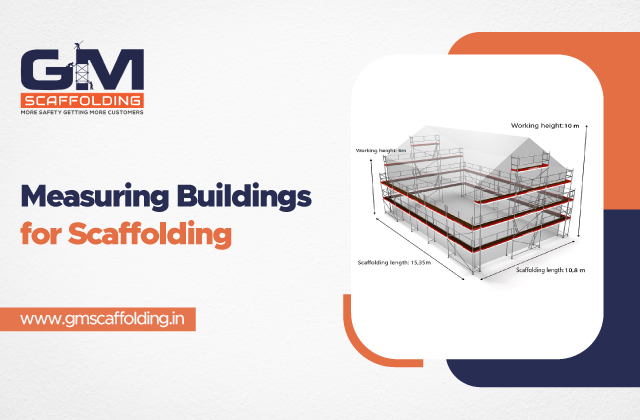
It is important that a qualified scaffolding contractor assesses the site before scaffolding work commences. Several factors must be considered, such as the structure’s height, the ground conditions, the load requirements, and access points. In order to determine the type and configuration of scaffolding necessary, a proper plan must be drawn up.
Step 2: Foundation and Base Setup
Base plates are placed on a firm, level surface, sometimes with sole boards beneath them for extra stability. This step is crucial. A poor foundation will compromise the entire structure above it.
Step 3: Erecting the Framework
Standards (uprights) are inserted into the base plates. Ledgers and transoms are then connected using couplers, forming the skeletal framework. The structure rises level by level as the work progresses.
Step 4: Setting up the working platform
As soon as the frames are set, scaffold boards are laid across the transoms to create the working platform. It is necessary to install handrails and toe boards in order to prevent falls and prevent tools from slipping from the edge.
Step 5: Tying and Bracing
The scaffolding is tied to the building using anchor ties. Diagonal bracing is added to prevent lateral movement. This step is what keeps the structure rigid and safe, especially in windy conditions.
Applications of Scaffolding in Civil Construction Projects
Where Is Civil Works Scaffolding Used?
Civil works is used across a broad range of construction activities. Think of it as the backbone of any elevated construction task. Common applications include:
- Development and construction of high-rise buildings
- Construction of bridges and flyovers
- Work on painting, plastering, and exterior finishing.
- Installation of cladding and curtain walls
- Maintenance and repair of industrial plants
- Renovation of heritage buildings
- Waterproofing and installation of roofs
We at Scaffolding in Tirupur offer specialised scaffolding solutions tailored for both small residential and large industrial projects throughout Tamil Nadu and nearby regions.
Scaffolding Work Safety: Rules Every Worker Must Follow
Construction scaffolding safety is not optional; it’s a legal and moral responsibility. Working at height is one of the leading causes of fatalities in the construction industry worldwide. That’s why work safety has to be taken seriously at every stage.
Key Scaffolding Safety Rules for Workers on Site
- Always inspect scaffolding before use: Make sure there are no loose fittings, damaged boards, or missing guardrails on the scaffolding before you use it.
- Don’t overload the platform: Do not exceed the load limits marked on the scaffold. Collapse is often caused by overloading.
- Use personal protective equipment (PPE): While erecting scaffolding, it is mandatory to wear safety helmets, safety harnesses, non-slip boots, and gloves.
- Ensure proper access points: Climbing the outside of scaffolding is strictly prohibited. Always use the designated ladders or stairways.
- Keep the platform clear: Tools and debris should not accumulate on the platform. A cluttered workspace leads to trips and falls.
- Check weather conditions: Avoid working on scaffolding during strong winds, heavy rain, or lightning. Wet boards become slippery and dangerous.
- Training is required to erect or dismantle scaffolding: Scaffolding erected or dismantled without proper preparation can be dangerous and illegal.
Scaffolding vs Formwork: Understanding the Difference
Many people confuse scaffolding and formwork, but they serve entirely different purposes. Scaffolding is a temporary working platform that supports workers and materials. Formwork, on the other hand, is a mould used to shape concrete into the desired structure.
To put it simply, you work on scaffolding; you pour concrete into formwork. Both are essential, but they are used at different stages and for different purposes on a construction site.
Also Read: https://blog.gmscaffolding.in/3-to-1-rule-in-scaffolding/
Conclusion
Scaffolding work is a fundamental part of safe and efficient construction. From understanding the right type of scaffolding and selecting quality construction scaffolding material, to setting up the system correctly and following construction scaffolding safety guidelines, every step matters.
When done right, scaffolding saves lives, improves productivity, and ensures workers can carry out their tasks with confidence at any height. Whether you’re involved in a small renovation or a large civil works scaffolding project, never cut corners when it comes to scaffolding.
If you’re looking for reliable scaffolding solutions in Tamil Nadu, explore our services for professional-grade scaffolding setups designed to keep your site safe and on schedule.
Frequently Asked Questions (FAQs)
1. What is scaffolding work in construction?
Scaffolding refers to the process of building and using a temporary elevated structure for the support of workers, tools, and materials during building, maintenance, or repair projects. The platform allows access to heights that aren’t accessible from the ground.
2. Why is scaffolding work important on a construction site?
The purpose of scaffolding is to provide a stable working platform at height and reduce the risk of accidents and falls. It also allows multiple workers to operate simultaneously at different levels, which significantly improves efficiency and productivity on-site.
3. What materials are used in construction scaffolding?
Scaffolding materials used in construction include steel tubes, aluminium sections, scaffold boards (timber or steel), couplers, clamps, base plates, and sole boards. Most commonly, steel is used due to its strength and durability, while aluminium is commonly used when weight is a concern.
4. What safety rules should workers follow while working on scaffolding?
Workers should always inspect the scaffold before use, wear appropriate PPE, including helmets and safety harnesses, avoid overloading the platform, use designated access points, keep the platform clear of debris, and avoid working during adverse weather conditions. Only trained personnel should erect or dismantle scaffolding.
5. How does scaffolding work help different construction activities?
There are many types of scaffolding work, including bricklaying, plastering, painting, cladding installation, concrete pouring, roofing, and structural maintenance. It provides a secure and adjustable working surface that can be configured to suit the specific requirements of each task.
6. What is the difference between scaffolding work and formwork?
Scaffolding work involves creating a temporary elevated platform for workers to stand on and carry out construction tasks. Formwork, however, is a temporary mould used to hold concrete in shape until it hardens. Workers operate on scaffolding, while formwork directly shapes structural elements like slabs, columns, and beams.