Why Scaffolding Is Essential in Construction Industry

Quick Answer
The importance of scaffolding in construction is that it gives workers a stable, engineered platform to build, repair, and inspect at height. Falls are still the biggest killer: in 2023, 38.5% of U.S. construction deaths involved falls, slips, or trips. Quality scaffolding systems, installed and inspected correctly, cut exposure and keep projects moving. (BLS)
Quick Overview
| Topic | Snapshot |
| Core purpose | Safe, stable work platform at height |
| Best for | Facade, plastering, MEP, painting, repairs |
| Key systems | Cuplock, ringlock, H-frame, tube and coupler |
| Safety essentials | Guardrails, access bays, inspections, fall protection |
| Procurement tip | Define scope, loads, duration, then request quotes |
Table Of Contents
- Quick Answer
- Quick Overview
- Why The Role Of Scaffolding Matters In Construction
- Construction Scaffolding Benefits For Project Delivery
- Types Of Scaffolding And Scaffolding Systems Used In India
- Temporary Access Solutions Compared With Scaffolding
- Scaffolding Safety In Construction And Construction Site Safety
- Scaffolding Installation, Inspection, And Handover Checklist
- FAQs
- Conclusion
Why The Role Of Scaffolding Matters In Construction
On a busy site, the role of scaffolding is to create predictable access, load paths, and work zones so teams can operate safely above ground level. Unlike makeshift ladders or stacked materials, scaffold platforms are designed to support people, tools, and materials together, making scaffolding a core piece of building construction equipment on most projects.
- Creates stable working platforms for multi-trade tasks at height
- Improves throughput by reducing repositioning and waiting time
- Supports quality finishing for plastering, cladding, ACP, and painting
- Helps organize zones, improving movement and housekeeping
Action tip: map every task that needs height access, then choose a scaffold layout that matches the sequence of work, not just today’s activity. If you are planning jobs in Tamil Nadu, review local availability and lead times early through scaffolding in coimbatore so procurement does not become a critical path.
Construction Scaffolding Benefits For Project Delivery
Construction scaffolding benefits go beyond reaching the next level. For project managers, the big win is predictable productivity: crews can work in parallel (masonry, MEP, facade) because access is planned, not improvised. For procurement, renting a standard scaffold package usually costs less than repeated delays, rework, and incident downtime overall.
| Benefit | Practical Impact | KPI To Watch |
| Parallel workfaces | Multiple trades work without re-erecting access | Cycle time per floor |
| Cleaner finishing | Level platforms reduce plaster and cladding rework | Rework hours |
| Safer material handling | Staging at height reduces manual lifting trips | Near-miss rate |
| Schedule resilience | Less waiting for lifts or ladders | Idle labour hours |
| Cost control | Rental vs delay, downtime, medical costs | Variance vs budget |
Action tip: build a simple access plan during tendering, then price scaffolding as a line item, not a leftover. Indicative listings in India show supported scaffold rentals around ₹6-₹7 per sq ft, while erection services can be quoted around ₹18 per sq ft, depending on system and height. Use site measurements and demand written scope.
Types Of Scaffolding And Scaffolding Systems Used In India
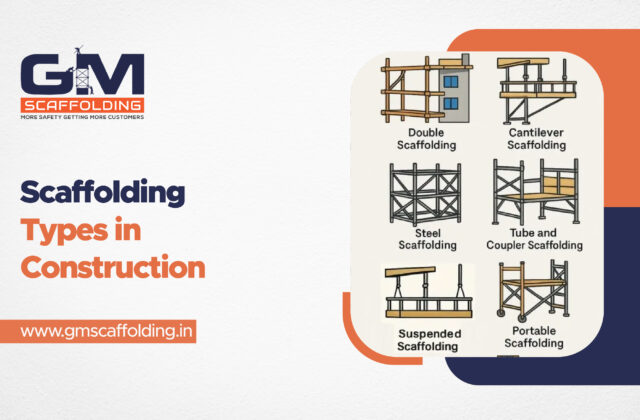
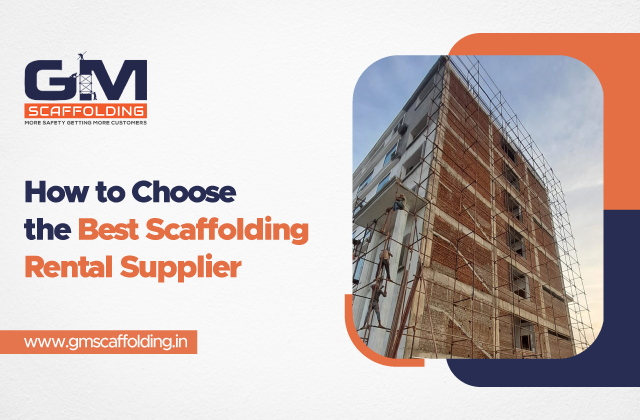
Choosing between types of scaffolding is mainly about load, geometry, and repetition. A straight plastering run may suit H-frame, while a high-rise facade needs modular scaffolding systems like cuplock or ringlock for faster bay spacing and higher capacity. In India, mixing systems on one site is common, so standardize connections and inspections.
| Type / System | Typical Use | Key Note |
| Tube And Coupler | Irregular shapes, retrofits, tight corners | Needs skilled fitting, more components |
| H-Frame (Walk-Through) | Plastering, painting, medium heights | Fast erect, limited geometry |
| Cuplock System | Slabs, high loads, repetitive bays | Good speed, strong node |
| Ringlock System | Facade access, complex bracing | Flexible rosettes, high capacity |
| Suspended Scaffold | High-rise facade, window work | Rigging critical, fall arrest required |
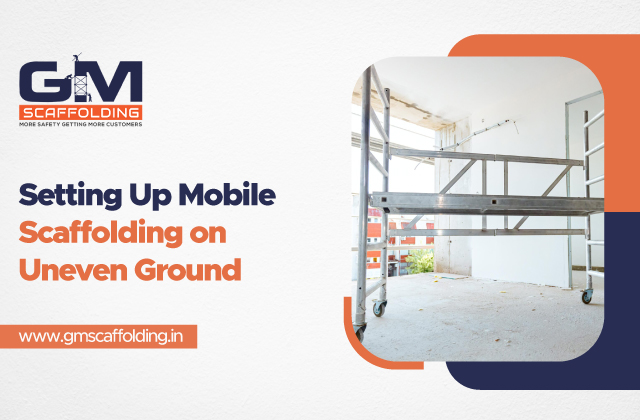
| Mobile Tower | MEP, interiors, short-duration tasks | Lock wheels, limit height |
Action tip for engineers and procurement: specify the scaffold class and expected live loads (people, materials, equipment) in your BOQ, then ask vendors for a layout drawing and tie-in plan. This prevents under-designed towers and surprise add-ons. For recurring work, consider a single system scaffold inventory to reduce training time and spares.
Temporary Access Solutions Compared With Scaffolding
Temporary access solutions include scaffolding, ladders, mobile elevating work platforms (MEWPs), mast climbers, and rope access. The right choice depends on duration, footprint, and how many trades need the same elevation. Scaffolding usually wins when work is repetitive across a facade, when multiple teams share access, or when materials must be staged at height.
| Solution | Works Best When | Watch Out |
| Scaffolding | Multi-trade, long duration, material staging | Needs space and inspection |
| Ladders | Very short tasks, light tools only | High fall risk, limited reach |
| MEWP (Boom/Scissor) | Moving workfront, tight ground footprint | Needs trained operator, flat surface |
| Mast Climber | Large facade, heavy materials, faster vertical travel | Higher setup cost, specialist team |
| Rope Access | Hard-to-reach spots, minimal ground obstruction | Limited material handling, strict training |
Action tip: use a two-question test before hiring equipment: Will the work area change daily, and do you need to carry materials up? If yes, consider MEWPs or a hybrid plan. If not, a scaffold platform can deliver productivity and safer movement. Share your scope early with your scaffold partner via Services so the design matches your schedule.
Scaffolding Safety In Construction And Construction Site Safety
Scaffolding safety in construction is where schedule pressure must never win. In 2023, falls, slips, and trips caused 38.5% of U.S. construction deaths, and 421 fatal falls were to a lower level. Those numbers underline why guardrails, safe access, and competent-person checks are non-negotiable parts of construction site safety, even on fast-track jobs. (BLS, OSHA)
“Falls are the leading cause of death in construction.”
Source: OSHA Fall Prevention Campaign
- Use guardrails or fall arrest above defined height thresholds (example: OSHA highlights 10 ft) (OSHA Scaffold Guide PDF)
- Ensure safe access bays, stair towers, and self-closing gates
- Control falling objects with toe boards, debris netting, and exclusion zones
- Tag every scaffold and stop use after modifications or storms
- Track trends: injuries linked to scaffolds and staging still occur year to year (CPWR Data Bulletin PDF)
Action tip for safety officers: treat scaffolds like any other critical temporary works. Require a signed handover, visible tagging, and a stop-work trigger after storms, alterations, or overloading. Align your checklist with Indian guidance such as IS 3696 (Part 1) for scaffolds, then audit one scaffold bay per shift until behaviours settle. (IS 3696-1 PDF)
Read More: https://blog.gmscaffolding.in/how-to-choose-right-scaffolding-rental-supplier/
Scaffolding Installation, Inspection, And Handover Checklist
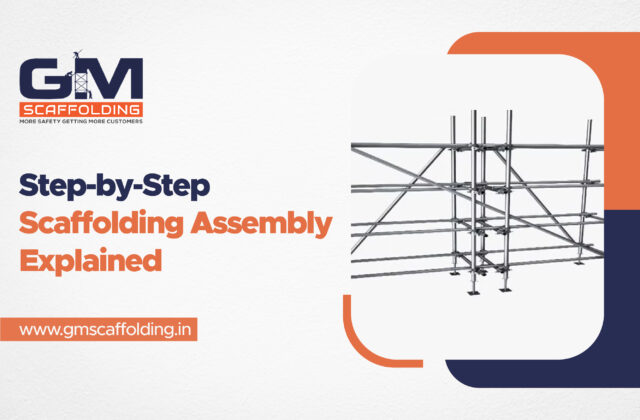
A strong scaffold is not “done” at erection. Scaffolding installation should end with a formal handover, then continue with daily checks and documented inspections. This protects structural engineers, supervisors, and contractors from hidden changes like removed ties, shifted base plates, or overloaded platforms. For teams learning how to assemble scaffolding, use the checklist below to keep responsibilities clear on-site.
| Step | What To Verify | Frequency / Owner |
| Base And Sole Plates | Level ground, mudsill, no settlement | Erection team, handover |
| Standards And Ledgers | Plumb, locked, correct bay spacing | Competent person, handover |
| Ties And Bracing | Installed as plan, not removed | Supervisor, daily walk |
| Platforms And Guardrails | Full decking, toe boards, safe gates | Safety officer, shift start |
| Access And Egress | Stair/ladder bays, clear landings | Site supervisor, continuous |
| Tags And Records | Green tag, inspection log, photo evidence | HSE, weekly audit |
- Keep load limits visible at access points
- Do a toolbox talk before first use by each trade
- Separate pedestrian routes from loading and unloading zones
“Before each work shift… a competent person must inspect the scaffold.”
Source: OSHA Scaffold Guide PDF
Action tip: standardize your inspection records so they survive handovers between day and night shifts. Keep a photo log of base conditions, ties, and access points, then attach it to your scaffold tag register. If you need support with design input or on-site guidance, contact GM Scaffolding through Contact and share your drawings.
FAQs
How Do I Choose Between Cuplock And H-Frame Scaffolding?
Cuplock handles higher loads and repetitive slab bays, so it suits larger structures and heavy shuttering. H-frame is quicker for routine plastering or painting and is easy to move in straight runs. Choose based on load class, geometry, and how often you will reuse the same layout.
What Is The Safe Height Limit For Scaffolding On Indian Sites?
There is no single safe “one-size” height. Maximum height depends on the scaffold system, base width, ties, bracing, and wind exposure. Follow a design or manufacturer layout, use a competent person for erection and inspection, and align checks with IS 3696 (Part 1) requirements.
How Often Should Scaffolding Be Inspected?
Inspect scaffolding before each work shift and after any event that could affect integrity, such as high winds, impact, modification, or foundation movement. Daily visual checks should be backed by documented inspections on a defined frequency (often weekly) depending on site risk. Use a tag system to control access.
Is Scaffolding Safer Than Using Ladders?
For most construction tasks at height, yes. A scaffold provides a level platform, guardrails, and room for tools and materials, so workers are not balancing on rungs. Ladders are best for short, light-duty work only. When ladders become a “workstation,” risk and fatigue rise fast.
What Documents Should A Contractor Keep For Scaffold Compliance?
Keep the scaffold design or standard configuration, load rating, erection checklist, handover certificate, inspection logs, and training records for erectors and users. Add a photo record of base plates, ties, and access points for traceability. These documents help during audits and also speed up incident investigations.
How Is Scaffolding Rental Cost Calculated?
Scaffolding rental cost is usually based on the system type (MS, aluminium, cuplock, H-frame), working height, total area or number of components, and rental duration (daily, weekly, monthly). Add transport, erection and dismantling, and any extra ties or stair towers. Get a measured scope to avoid surprises.
Can Scaffolding Be Used In Tight Industrial Plants Or Shutdowns?
Yes, and it is common in industrial and commercial facilities where access is constrained. Use modular scaffolding systems for tighter bay control, plan load paths to avoid services, and create exclusion zones for live operations. Pre-fabricated stair modules and cantilever brackets can improve access without blocking walkways.
How Do I Reduce Delays Caused By Scaffolding Changes?
Freeze the access plan early and link it to your look-ahead schedule. Use standard bay sizes, label components, and keep a small buffer stock for alterations. Most delays happen when ties are removed, platforms are overloaded, or other trades borrow parts. Assign one scaffold controller to approve all changes.
Conclusion
The importance of scaffolding in construction is not just “getting up there.” It is about controlled access, consistent productivity, and lower risk across every trade that works at height. When you choose the right scaffold type, define loads, and enforce daily inspections, you reduce rework and protect people and timelines.
Next step: treat scaffolding as planned temporary works. Build an access plan during tendering, select a system that fits your geometry, and insist on handover and tagging before use. If your project is in and around Coimbatore, start with a scoped discussion using your elevations, quantities, and timelines so the scaffold package arrives ready.
Planning a high-rise, facade, or industrial shutdown? GM Scaffolding provides on-hire scaffolding systems, working platforms, and temporary access solutions across Tamil Nadu with a safety-first approach. Request a site visit, share your elevations, and get a scoped quote with installation support. Start with scaffolding in coimbatore or reach us via Contact.
References
- https://www.bls.gov/opub/ted/2025/fatal-falls-in-the-construction-industry-in-2023.htm
- https://www.osha.gov/stop-falls
- https://www.osha.gov/sites/default/files/publications/osha3150.pdf
- https://www.cpwr.com/wp-content/uploads/DataBulletin-March2024.pdf
- https://law.resource.org/pub/in/bis/S03/is.3696.1.1987.pdf