Different Types of Scaffolding Clamps and Their Uses

Introduction
Scaffolding clamps are essential for guaranteeing stability and safety on construction projects that require temporary structures. These little yet necessary components link scaffolding pipes and help build a safe framework for workers, tools, and supplies.
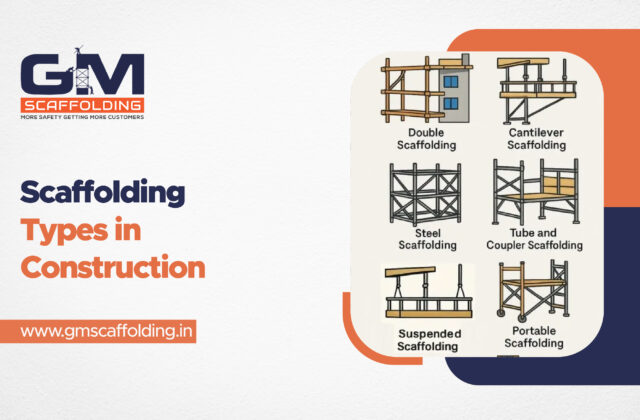
Understanding the different types of scaffolding clamps used in construction enables you to select the appropriate components for diverse site requirements and also helps in understanding broader scaffolding types in construction used across different building projects.
Each clamp is intended for a unique application, such as joining pipes at various angles or fastening scaffolding to beams. This article covers the various types of scaffolding clamps and how they are used to facilitate safe, effective construction activities.
Types of Scaffolding Clamps
To establish a robust framework across various construction scenarios, a wide range of scaffolding clamps is required. These clamps securely connect scaffolding pipes, ensuring the framework remains balanced under stress.
A standard scaffolding clamp is composed of high-strength steel and is intended to keep pipes securely in place. These clamps are commonly used in building construction, maintenance, bridge construction, and industrial applications.
Before picking clamps, it is important to understand the various types of scaffolding clamps and how they work inside the scaffolding system, along with understanding common scaffolding parts names used in construction.
Read More:https://blog.gmscaffolding.in/scaffolding-materials-guide-for-construction/
Why Scaffolding Clamps Are Important
Clamps are vital connectors that contribute to the structural stability of scaffolding and highlight the importance of scaffolding in construction.
The following are some of the key reasons why clamps are important:
- Secure connection between scaffolding pipes
- Improved structural stability
- Flexibility in constructing scaffolding structures
- Support for many scaffold configurations
Scaffolding structures vary from site to site; several types of clamps are developed to accommodate specific connections and loads.
Common Scaffolding Clamp Names
When assembling scaffolding systems, construction experts frequently refer to different scaffolding clamps by their names.
These clamps join vertical and horizontal pipes to create a stable frame.
| Clamp Name | Primary Function |
| Right Angle Clamp | Connects pipes at 90-degree angles |
| Swivel Clamp | Allows adjustable pipe connections |
| Beam Clamp | Secures scaffolding to beams |
| Sleeve Clamp | Joins two pipes end-to-end |
Understanding these clamps ensures correct installation and safety.
Fixed Clamp Scaffolding
A fixed clamp scaffolding connector is one of the most popular clamps in scaffolding building.
This clamp connects two scaffolding pipes at a right angle to form a robust, stable junction.
The key features include:
- Strong grip between pipes
- Stable right-angle connection
- High load support
Fixed clamps are commonly employed in both vertical and horizontal scaffolding frames.
Scaffolding Pipe Clamp
A scaffolding pipe clamp is specifically intended to secure scaffolding tubes together.
These clamps are used to connect pipes to build scaffolding.
Important applications include:
- Connecting horizontal ledgers and vertical standards
- Creating secure working platforms
- Strengthening the scaffold joints
- The pipe clamp ensures that scaffolding pipes are securely attached during construction and supports the proper steps to assemble scaffolding.
Scaffolding Beam Clamp
Scaffolding beam clamps are used to fasten scaffolding to structural beams.
These clamps provide support for scaffolding systems in situations where standard ground-based scaffolding is not feasible.
Common applications include:
- Industrial maintenance work
- Bridge Construction
- Structural repair projects
Beam clamps help to distribute weight uniformly across structural beams.
Various Types of Clamps Used in Scaffolding
Depending on the scaffolding design, construction projects may require a variety of clamps.
Some common clamp types are:
- Right-angle clamps
- Swivel clamps
- Sleeve clamps
- Putlog Clamps
Each clamp has a unique role, ensuring that the scaffold structure is stable and properly oriented.
Load Capacity of Scaffolding Clamps
Understanding the load capacity of scaffolding clamps is critical for ensuring safe scaffold construction.
Clamps must be robust enough to hold workers, tools, and materials without fail.
| Clamp Type | Approximate Load Capacity |
| Right Angle Clamp | High load capacity |
| Swivel Clamp | Medium load capacity |
| Sleeve Clamp | Moderate load support |
| Beam Clamp | Heavy structural support |
The actual load capacity can vary based on the clamp design and material quality.
Choosing the Right Clamp for Your Project
Choosing the appropriate clamp type ensures the scaffolding remains stable throughout the job.
When selecting clamps, consider the following factors.
- Type of scaffolding structure required
- Weight load expected on the scaffold
- Pipe Diameter Compatibility
- Safety standards and regulations
For building projects that demand dependable equipment, many contractors turn to scaffolding rental in tirupur and scaffolding clamps suppliers to obtain high-quality scaffolding components.
Using reputable vendors ensures that clamps meet safety and durability requirements.
Safety Tips When Using Scaffolding Clamps
The correct use of scaffolding clamps is critical for safety on construction sites and must follow proper scaffolding safety standards.
Key safety guidelines include:
- Inspect clamps before installation
- Ensure the clamps are adequately tightened
- Avoid utilising clamps that are damaged or worn
- Follow the load capacity recommendations
Regular inspections help to avoid accidents caused by loose or malfunctioning clamps.
Conclusion
Scaffolding clamps serve an important function in constructing strong, safe scaffold structures. Understanding the different types of scaffolding clamps helps ensure your building framework is safe and reliable throughout the project.
Each clamp type has a distinct function, such as connecting pipes, anchoring scaffolding to beams, or sustaining huge loads. The proper selection and installation of clamps improves structural stability and worker safety.
Understanding the various clamp types and applications makes it easier to select the appropriate components for construction operations. Using high-quality clamps and following suitable installation procedures contributes to a robust scaffolding framework that supports safe and efficient construction operations.
FAQs
1.What is a scaffolding clamp?
A scaffolding clamp is a metal connector that securely connects scaffolding pipes. It contributes to the development of a sturdy framework that supports workers, tools, and materials during the construction process.
2.How many types of scaffolding clamps are there?
There are various sorts, but the most popular are right-angle clamps, swivel clamps, sleeve clamps, putlog clamps, and beam clamps.
3.What is a scaffolding beam clamp, and where is it used?
A scaffolding beam clamp is used to attach scaffolding to steel beams securely. It is widely utilised in bridge construction, industrial maintenance, and structural repair projects.
4.What is a scaffolding pipe clamp, and why is it important?
A scaffolding pipe clamp links two scaffolding pipes, forming a stable structure. It keeps the scaffolding structure stable and prevents it from moving during construction.
5.What are the different types of scaffolding clamp names used on site?
Common clamp names include right-angle clamp, swivel clamp, sleeve clamp, putlog clamp, and beam clamp.
6.What are the load capacities of scaffolding clamps?
Load capacity varies by type, but most scaffolding clamps are designed to support heavy loads while maintaining stability in building structures.