Difference Between Single and Double Scaffolding: Complete Guide for Construction Projects
Introduction
Scaffolding is one of the first structural support systems you’ll encounter when starting in construction. Understanding the difference between single and double scaffolding is critical because it directly impacts safety, efficiency, and project quality. Whether you are working on a modest residential building or a huge commercial project, selecting the appropriate scaffolding type can make a significant impact.
Scaffolding offers temporary support for personnel and materials during building, repair, or maintenance. The most popular types of scaffolding are single- and double-scaffolding. Understanding how they differ allows you to make better project decisions.
Single and Double Scaffolding: Definition and Key Features
What Is Single Scaffolding?
Before you compare, you should first grasp what single scaffolding is. It is a basic type of scaffolding used mostly for brick masonry work.
In construction, a single scaffolding consists of a single row of vertical supports (known as standards) that are parallel to the walls. Horizontal components link these supports and rely on the building structure for extra support.
Key Features of Single Scaffolding:
- A single row of vertical standards
- Supported partially by the wall
- Uses putlogs embedded in the wall
- Simple and cost-effective
This type is also known as “putlog scaffolding,” because putlogs play an important part in its structure.
What Is Double Scaffolding?
Now, let’s clarify the concept of double scaffolding. This type is widely employed in stone masonry, where drilling holes into walls is problematic.
Double scaffolding consists of two rows of vertical supports, which increase its stability and independence from the wall. It is also known as independent scaffolding because it is not dependent on the structure for support.
Key Features of Double Scaffolding:
- Two rows of vertical supports
- Strong and stable framework
- Does not depend on the wall
- Suitable for heavy load jobs
The double scaffolding system is commonly utilised for tasks that require increased strength and safety.
Difference Between Single and Double Scaffolding
To properly comprehend the differences between single and double scaffolding, compare them in terms of structure, usage, and safety.
Here’s a simple comparison table:
| Feature | Single Scaffolding | Double Scaffolding |
| Structure | One row of supports | Two rows of supports |
| Wall Dependency | Depends on the wall | Independent of the wall |
| Stability | Moderate | High |
| Usage | Brick masonry | Stone masonry |
| Cost | Lower | Higher |
| Safety Level | Basic | Advanced |
This comparison lets you quickly determine which type is best suited to your project. You can also explore the differences between cuplock and ringlock scaffolding for advanced systems.
Visual Understanding of Both Types
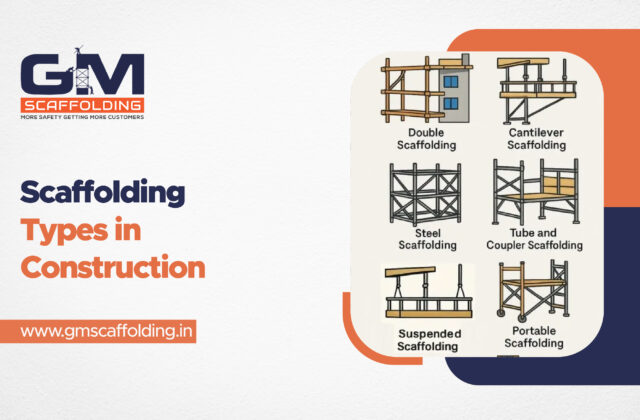
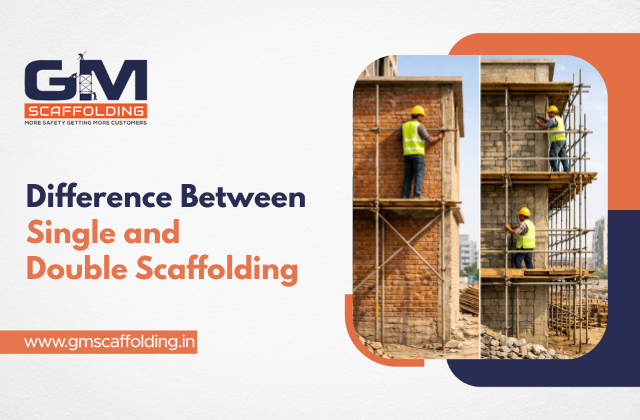
To make things easier, envision a single scaffolding diagram as a simple structure resting against a wall, and a double scaffolding diagram resembles a freestanding frame with more support.
This visible contrast demonstrates why double scaffolding is more robust and commonly utilised in complex projects.
Understanding the difference between putlog and independent scaffolding also helps here. Putlog scaffolding relies on the wall, while independent scaffolding stands on its own.
Single and Double Scaffolding Benefits Explained
Advantages of Single Scaffolding
When working on smaller projects, single scaffolding can be a suitable option.
Benefits:
- Simple to install and dismantle
- Cost-effective for budget projects
- Needs fewer materials
- Ideal for simple building tasks
However, keep in mind that it relies on the wall for support, which may limit its usefulness.
Also Read: https://blog.gmscaffolding.in/benefits-of-aluminium-scaffolding/
Advantages of Double Scaffolding
For more challenging jobs, double scaffolding performs better.
Benefits:
- Strong and stable construction
- Independent of the building wall
- Safer for workers
- Perfect for heavy construction tasks
This makes it an ideal choice for large-scale or complex buildings.
Key Differences and When to Use Single vs Double Scaffolding
Key Differences You Should Focus On
When comparing these two systems, the primary focus should be on support, safety, and applicability. Single scaffolding is attached to the building wall, making it suited for smaller operations such as brickwork, whereas double scaffolding stands independently, providing greater strength for heavy projects.
The number of support rows is also important, as double scaffolding improves load distribution. Cost is another consideration: single scaffolding is less expensive but less stable. Finally, for maximum efficiency, your decision should be based on project complexity, required safety levels, and the sort of construction activity involved.
When Should You Use Each Type?
The type of scaffolding you use depends on your project’s needs.
Use Single Scaffolding When:
- You are engaged in brick masonry
- The budget is restricted
- The structure can support putlogs
Use Double Scaffolding When:
- You are working in stone masonry
- Safety is a priority
- You need a stable and independent structure
If you’re unsure, consulting professionals or opting for a scaffolding rental in Coimbatore can help you choose the right system based on your project.
Common Mistakes and Practical Tips for Scaffolding
Common Mistakes to Avoid
Even if you understand the fundamentals, errors might still occur. Avoid the following common errors:
- Choosing scaffolding based solely on cost
- Ignore safety requirements
- Using one scaffolding for big labour
- Poor installation or alignment
- Not examining materials before use
Being aware of these difficulties allows you to remain safe and efficient.
Practical Tips for Beginners
If you’re new to construction, follow these simple steps:
- Always examine the type of task before choosing scaffolding
- Prioritise safety over costs
- Use high-quality materials and ensure correct setup
- Ensure regular inspections and maintenance
- Collaborate with experienced specialists as needed
These techniques can help you minimise hazards and improve project success. Always follow proper scaffolding safety standards to ensure worker protection.
Conclusion –
You should now grasp the difference between single and double scaffolding, as well as how each form meets different construction requirements. While single scaffolding is easy and inexpensive, double scaffolding provides more stability and safety.
Your choice should be based on the nature of your project, the materials utilised, and the level of support required. When you make the right decision, you not only increase productivity but also ensure the safety of all parties involved.
Understanding ideas like the distinction between single and double scaffolding will help you make better plans and create stronger structures as you continue to work in the construction industry.
FAQs
- What is the difference between single and double scaffolding?
Single scaffolding has one row of supports and is attached to the wall, whereas double
scaffolding has two rows and is independent, making it more stable. - What is single scaffolding in construction?
Single scaffolding is a basic type of scaffolding in construction with a single row of vertical supports placed parallel to a wall. It is mainly used for brick masonry work and is simple, cost-effective, and easy to set up. - What is double scaffolding used for?
Double scaffolding is used in stone masonry and heavy construction to provide robust, solid support. - Why is double scaffolding also called independent scaffolding?
It is called independent scaffolding because it does not rely on the building wall for support and can stand on its own. - Where is single scaffolding commonly used?
Single scaffolding is widely utilised in brickwork, where the wall can support putlogs. - Which is stronger: single or double scaffolding?
Double scaffolding is stronger and more stable due to its two rows of supports.