Why Scaffolding Helps Speed Up Building Projects
The Simple Truth: Speed Comes From Better Access
Building projects don’t usually fall behind because people are lazy. They fall behind because workers spend too much time getting into position, moving equipment, and waiting for a safe moment to do the job. That’s why Scaffolding Helps Speed Up Building Projects isn’t just a catchy phrase it’s a practical reality on busy sites.
Using reliable providers of quality scaffolding in coimbatore ensures stable, properly assembled platforms that maximize work efficiency and minimize downtime.Scaffolding speeds things up by creating a stable “work highway” at the right height.
Instead of stopping every few minutes to climb down, shift a ladder, or hunt for a safe stance, workers can stay in the work zone and keep momentum. And here’s the kicker: when access is safer and more predictable, crews also face fewer stoppages, fewer injuries, and fewer “everyone off the platform” moments.
Why Scaffolding Helps Speed Up Building Projects: The 11 Speed Boosters
This is the heart of it: scaffolding turns “stop-and-go work” into “steady-flow work.” Below are the 11 big reasons scaffolding helps teams finish faster without relying on risky shortcuts.
1) One Platform, Many Tasks
A scaffold lift can support several tasks at once:
- Bricklaying while another worker points or cleans joints
- Siding install while a second worker preps flashing
- Painting while another worker masks and cuts edges
That ability to work side-by-side is a huge schedule advantage, especially when deadlines are tight.
2) Less Repositioning Than Ladders
Ladders are “point access.” Scaffolds are “area access.”
With ladders, workers must keep moving the ladder to reach the next section. With scaffolding, they can move along the platform and stay productive. This “less moving, more doing” effect is one of the most common real-world reasons contractors say scaffolding improves efficiency.
A cost-benefit study from New Zealand reported that, when prompted, half of respondents agreed or strongly agreed that scaffolding speeds up the building process (50%).
3) Faster Material Handling
Time disappears when materials aren’t where they need to be. Scaffolds help because they can be planned with:
- Dedicated staging areas
- Loading points
- Better routes for lifting and passing materials
Even simple choices like keeping fasteners, sealants, and hand tools on the platform reduce trips up and down.
4) Better Movement Up and Down
Good access is a productivity tool. Stair towers and proper ladder bays reduce bottlenecks when multiple workers need to move between levels.
OSHA’s scaffold guide explains that employers must provide access when platforms are more than 2 feet above or below a point of access, and it lists acceptable access methods (ladders, stairways, etc.)
5) Cleaner Work = Fewer Fixes
A stable platform helps quality. When workers aren’t balancing, overreaching, or fighting for a safe stance, they can:
- Cut straighter lines
- Fasten more accurately
- Align materials more consistently
Quality problems create rework. Rework kills schedules. Scaffolding helps reduce that back-and-forth.
6) Fewer Work Stoppages From Incidents
Even minor incidents can derail a day:
- A slipped ladder foot
- A dropped tool
- A near-miss that triggers a safety stand-down
Scaffolding, when properly assembled and used, can lower those risks. And fewer incidents usually means a steadier timeline.
7) Predictable Daily Setup
Scaffolding supports repeatable routines:
- Start shift → inspect → stock tools → work
- Breaks and shift changes are smoother because the platform is already staged
- End shift clean-up is easier because tools and waste can be managed on the platform
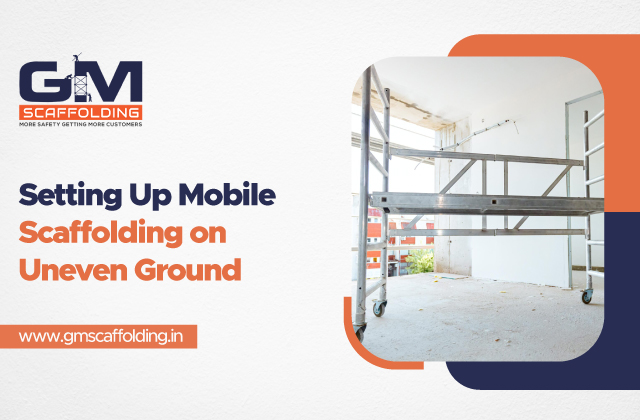
Following OSHA’s daily inspection requirement pushes teams toward a predictable rhythm that often improves planning discipline. Teams that know how to efficiently set up mobile scaffolding can maintain this rhythm even when moving platforms between different work areas.
8) Easy Coverage for Wide Facades
Projects like exterior painting, plastering, cladding, and brickwork often need long, continuous access. Scaffolds shine here because they provide a consistent working height across a wide span, helping crews maintain pace instead of constantly changing position.
9) Supports Temporary Protection
Speed isn’t only about moving fast—it’s about keeping work possible.
Scaffolds can support:
- Debris netting and containment
- Scaffold sheeting/wrap to reduce wind impact
- Weather protection planning for sensitive tasks
This can reduce weather-related downtime (especially on exterior work).
Related: https://blog.gmscaffolding.in/weather-conditions-impact-scaffolding-projects/
10) Simplifies Inspection and Supervision
When work happens on a defined platform with controlled access, supervisors can:
- Check quality faster
- Spot missing guardrails or poor housekeeping sooner
- Keep trades coordinated
In the UK, HSE guidance notes that scaffolding inspections must be done by a competent person, and for tower scaffolds used in construction where a fall of 2 meters or more could occur, inspections are required after assembly and every 7 days.
11) Makes “Last 10%” Punch Lists Faster
Finishing work is full of small tasks:
- Touch-up paint
- Sealing edges
- Adjusting fixtures
- Snagging and cleanup
Scaffolding makes these quick because workers can move along the platform and reach many items without repeated setup.
Conclusion: Faster Projects Start With Better Platforms
When crews can reach the work comfortably, move along a steady platform, and keep tools and materials close, the job naturally moves faster. Add predictable inspections and safe access, and you get fewer disruptions and a smoother schedule. In short, scaffolding doesn’t just help people work at height it helps projects keep their rhythm and finish strong.
Related: https://blog.gmscaffolding.in/how-to-choose-right-scaffolding-rental-supplier/
FAQ
1) Does scaffolding always make a job faster?
Not always. If the job is tiny (like a quick repair), a ladder might be quicker. But for longer tasks, wide areas, or repeated trips, scaffolding often saves time by reducing repositioning and improving workflow.
2) What’s the biggest speed advantage of scaffolding?
Continuous access. Workers can move along a platform and keep working without stopping to reset equipment.
3) What kind of access is required for scaffold platforms?
OSHA’s scaffold guide states employers must provide access when platforms are more than 2 feet above or below a point of access, and acceptable access includes ladders and stairways.
4) Do scaffolds help improve work quality too?
Yes. A stable platform helps workers maintain better posture, control tools more accurately, and avoid rushed “reach work” that often causes mistakes and rework.
5) What’s one simple tip to get maximum speed from scaffolding?
Stage your work: keep tools and light materials on the platform, keep walkways clear, and plan your access points so workers aren’t queuing up.