Different Types of Shuttering and Their Uses in Construction
Introduction
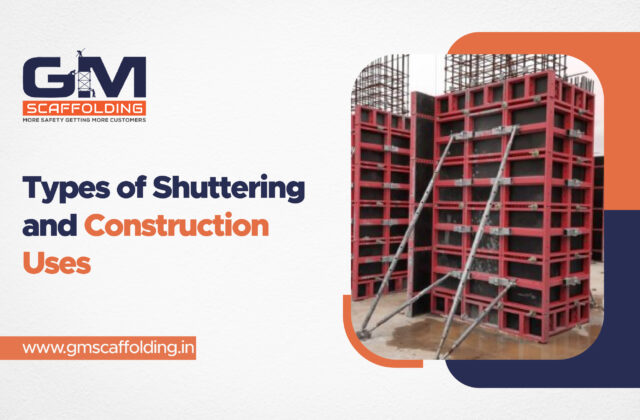
Different types of shuttering in construction are required to securely, accurately, and efficiently shape concrete on any building site. Shuttering acts as a temporary mould into which fresh concrete is poured, directly affecting the structure’s quality, strength, and finish.
Understanding each type enables engineers, contractors, and site supervisors to select the appropriate system for columns, beams, slabs, and walls.
Shuttering in Construction
Shuttering in construction is the temporary formwork used to support wet concrete until it cures and has enough strength to support itself. It consists of panels, supports, and ties that work together to provide the required shape to structural components such as columns, slabs, beams, and foundations. Good shuttering work provides accurate measurements, alignment, and a smooth surface while keeping workers safe on the job site.
In simple terms, shuttering is defined as “temporary moulds or casings that hold concrete in place.” It is a component of larger formwork systems. It is closely related to centring and shuttering, in which centring provides support from below (particularly for slabs and beams) and shuttering forms the sides. Proper centering in construction, combined with well-designed forms, prevents concrete surface deformation and honeycombing.
Common Shuttering Materials
Choosing the appropriate shuttering material affects cost, reusability, and the quality of the concrete finish. Common choices include:
- Wood or plywood: Often used for traditional shuttering, these materials are easy to cut and assemble and work well for modest to medium-sized projects.
- Steel shuttering: Perfect for large-scale, repetitive tasks, as it is recyclable, long-lasting, and offers a smooth finish with excellent dimensional precision.
- Modular and aluminium systems: Employed in mass housing or repeated patterns because they are lightweight and quick to assemble and disassemble.
In many projects, shuttering and scaffolding function in unison, since scaffolding provides access and working platforms around the formwork. For larger construction projects, contractors may want to work with scaffolding In Coimbatore or other industrial areas to provide reliable access.
Related: https://blog.gmscaffolding.in/why-scaffolding-helps-speed-up-building-projects/
Types of Shuttering by Structural Element
1. Column Shuttering
Column shuttering provides support for vertical elements that transfer weight from beams and slabs to the foundation. It must be durable enough to bear concrete pressure while maintaining its precise shape (square, rectangular, circular, or polygonal). Effective column shuttering comprises:
- Uses tight joints and rigid panels to prevent leaks.
- Includes appropriate ties and clamps to prevent bulging.
- Allows for quick vertical alignment and plumb adjustments.
This type of shuttering work in construction is crucial, as any misalignment in the columns can affect the entire frame shape.
2. Slab Shuttering
Slab shuttering covers the bottom and margins of floor and roof slabs. It is closely related to shuttering and centring because the weight of the fresh concrete is supported by the centring supports (props, joists, and beams). Key features of slab shuttering
- Sufficient propping and bracing to prevent slumping.
- Proper levelling is required to maintain slab thickness and slope.
- Use of tight, even panels for a consistent surface finish.
In traditional shuttering, wooden beams and plywood sheets are usually utilised; in newer systems, modular panels and adjustable props accelerate slab cycles.
Conventional Shuttering vs. Modern Systems
Conventional shuttering is often made of wood, plywood, and simple steel sections assembled on site in accordance with blueprints. It is adaptable and appropriate for smaller projects or irregular shapes, but if not properly overseen, it can be labour-intensive and less reliable.
Aluminium panels, plastic forms, and modular steel shuttering are standard components of modern systems. These are:
- Faster to assemble and disassemble.
- More consistent in fit and size.
- Better for recurring planning, such as business floors or apartments.
Contractors frequently combine both methods, utilising modern technologies for standard slabs and beams and traditional shuttering for complex or unique elements.
Steel Shuttering and Metal Systems
Steel shuttering is widely used in industrial and high-rise constructions due to its durability and reusability. Steel Panels:
- Give precise, consistent measurements.
- Unlike wood, it is resistant to damage and warping.
- Provide a smooth, concrete surface requiring minimal plastering.
Steel forms, on the other hand, require a larger initial investment and proper handling to avoid corrosion or damage. When implementing a contemporary marketing idea in building planning and project management, where efficiency and lifespan costs are essential, it is often used alongside other metal systems.
Shuttering Work: Planning and Execution
Efficient shuttering work requires careful planning and expert workers. Crucial elements consist of:
- Reading drawings and determining the loads on each piece.
- Choosing the appropriate shuttering material according to the criteria for finish and repetition.
- Ensuring secure access via guardrails, platforms, and ladders.
- Checking all connections, bracing, and props before pouring concrete.
A professional shuttering contractor will plan materials, workforce, and inspection stages to ensure formwork is installed, checked, and stripped systematically. Knowing how to assemble scaffolding properly is essential for safe access and support during these activities.
Relationship Between Shuttering Work and Safety
Site safety is directly impacted by shuttering during construction. Poorly conceived and executed shatter work can result in formwork failure, concrete blowouts, and serious injuries. To ensure security:
- Use sufficient support and bracing beneath slabs and beams.
- Steer clear of temporary supports and overloading platforms.
- Follow the appropriate stripping time based on the span and strength of the concrete.
Regular inspection is required before, during, and after concrete placement to prevent failures and ensure structural integrity. Additionally, maintaining the right scaffold height is crucial for worker safety and proper shuttering execution.
Different Uses of Shuttering in Construction
Shuttering is used in construction for a variety of structural elements, including:
- Footings and Foundations: The width and depth of footings and plinth beams are controlled by side and vertical forms.
- Shear walls and retaining walls: Concrete’s enormous lateral pressure is resisted by strong forms.
- Beams and Girders: They form the central floor system when combined with slab shuttering.
Each application necessitates unique detailing, but all follow the same principle: safe, stable, and precisely aligned formwork. Proper setup of mobile scaffolding is often required to reach and support these structures safely.
Conclusion
Understanding the many forms of shuttering in construction and their applications enables builders to improve quality, safety, and cost-effectiveness. Every decision, from column shuttering to slab shuttering, from traditional shuttering to sophisticated steel shuttering systems, affects how well the concrete building performs in the end.
Projects can achieve structural design objectives while upholding high standards of safety and quality through carefully planned centering and shuttering, appropriate material selection, and dependable shuttering work during construction.
FAQ
1.What is shuttering in construction, and why is it important?
Shuttering is a temporary mould that ensures precision, strength, and safety by holding wet concrete in place until it solidifies.
2.What are the different types of shuttering used in construction?
Common types include column, slab, beam, wall, footing, and circular shuttering.
3.What materials are commonly used for shuttering work?
Plywood, steel, aluminium, plastic, wood, and occasionally composite materials are utilised.
4.How is column shuttering different from slab shuttering?
Column shuttering is vertical and supports tall concrete sections, whereas slab shuttering is horizontal and can support huge flat surfaces.
5.What are the advantages of steel shuttering over conventional shuttering?
Steel shuttering offers smoother finishes, is stronger and more resilient, is reusable, and is less expensive over time.