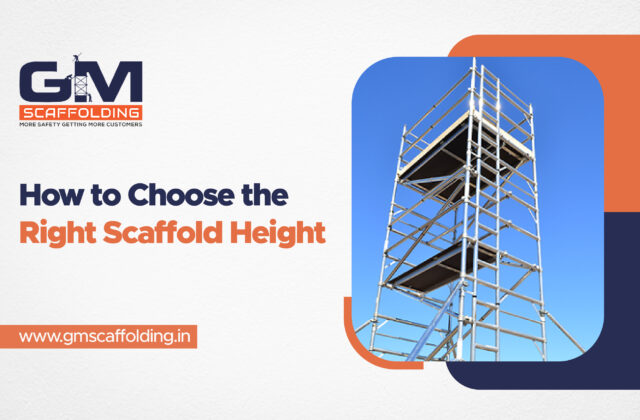
Choosing the Right Scaffold Height for Safety and Efficiency
Quick Summary:
Choosing the right scaffold height is essential for safety and efficiency on a jobsite. Scaffold height includes both the working platform height, which affects productivity, and the overall structure height, which affects stability. Proper height prevents overreaching, unsafe climbing, and fatigue.
The blog introduces a 9-rule method to select scaffold height effectively: start with task height, ensure safe reach, match lift spacing to the trade, provide safe access, respect fall-protection thresholds, maintain stability, factor in wind and weather, plan loads and staging, and know when engineering approval is required.
What “Scaffold Height” Really Means on a Jobsite
People say “scaffold height,” but they often mean two different things:
Working Platform Height vs Overall Structure Height
- Working platform height: the vertical distance from the ground (or base) to the platform where workers stand.
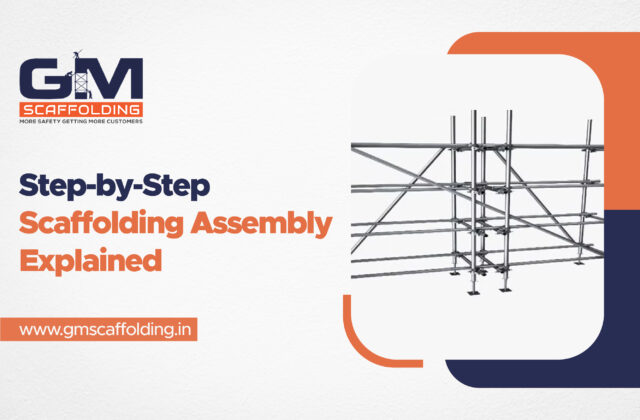
- Overall scaffold height: the total structure height (often higher than the top platform because of guardrails, frames, and extensions).
- Why this matters: the platform height drives daily productivity (where the hands work), while the overall height drives stability planning (tie-ins, bracing, wind effects).
When using professional scaffolding rental in coimbatore, understanding these height distinctions ensures you rent the correct scaffold size for both productivity and safety.
Why the “Right Height” Is a Safety Decision
Choosing height is not just about “reaching the wall.” It’s about avoiding the bad habits that cause falls and collapses:
- Overreaching and leaning (common when platforms are too low)
- Working from the top rail or stacking materials as a “step” (common when platforms are too high or poorly planned)
- Building tall without enough restraint (tall scaffolds need stability control)
Choosing the Right Scaffold Height for Safety and Efficiency: The 9 Rule Method
This section gives you a practical method you can use on real jobs. It’s written to help you decide platform heights quickly without turning your jobsite into a “trial-and-error” zone.
Rule 1: Start With the Task Height (Not the Building Height)
Ask: Where do the worker’s hands need to be?
Examples:
- Installing soffit? Your hands work high and close to the underside.
- Laying brick? Your hands work around chest height as the wall rises.
- Painting siding? Your hands sweep across a wide band.
A simple starting point: set the platform so the main work area is between waist and shoulder height for most tasks. That reduces fatigue, improves control, and speeds up output.
Rule 2: Use Safe Reach, Not Stretching
“Just stretch a bit” is how quality drops and incidents rise. When a platform is too low, workers:
- Lean out past guardrails
- Work with arms fully extended
- Lose tool control (drips, crooked fasteners, poor alignment)
Good efficiency comes from stable posture. If the work is consistently above shoulder level, raise the platform. If the work is consistently below knee level, raise it too—nobody is fast when they’re bent over all day.
Rule 3: Pick Lift Spacing That Matches the Trade
Different trades need different “lifts” (platform levels):
- Masonry often needs more frequent lift changes as the wall rises.
- Cladding/siding often benefits from long, continuous runs at steady heights.
- MEP/industrial work may need platforms aligned to pipes, cable trays, or structural steel.
Practical tip: plan lift spacing so workers can complete a meaningful “band” of work per level—then move up in a predictable rhythm.
Rule 4: Lock in Safe Access Early
Access affects speed more than most teams expect. If access is awkward, crews waste minutes every hour.
Use proper access options (ladders, stair towers, gates) and keep them consistent. OSHA’s scaffold guidance emphasizes providing safe access and avoiding improvised climbing routes.
Access Traps That Slow Projects Down
Watch out for:
- One access point for too many workers (creates a “queue”)
- Access that forces workers to step sideways onto the deck
- People climbing braces because “it’s quicker” (until it isn’t)
Rule 5: Respect Fall-Protection Thresholds
In OSHA’s system, once workers are more than 10 feet above a lower level, they must be protected from falls using guardrails, a personal fall arrest system (PFAS), or both
So when you choose the platform height, also choose the protection plan:
- Will guardrails be installed before use?
- Will PFAS be required for certain tasks?
- Are there openings, edges, or narrow platforms that need extra controls?
Rule 6: Control Stability With the 4:1 Reality Check
As scaffolds get taller, stability becomes the main event.
OSHA requires that supported scaffolds with a height-to-base width ratio of more than 4:1 be restrained from tipping by guying, tying, bracing, or equivalent means.
Practical takeaway:
- If you increase height, you often must increase restraint (ties/braces/guys) and follow the system’s instructions.
- Treat “just one more level” as a design change, not a casual decision.
Rule 7: Factor Wind, Sheeting, and Weather
Height amplifies wind effects. Add sheeting or wrap, and the scaffold can act like a sail. That means:
- More ties/braces may be needed
- Work may need to pause in high winds
- Base conditions (mud, thawing ground) matter more over time
Even if your scaffold is “fine today,” it’s important to consider how weather affects scaffolding work, because conditions can make it unsafe tomorrow especially when it’s tall.
Rule 8: Plan Loads and Staging at Each Level
Scaffold height choices affect where people store tools and materials. If the platform is at the “perfect height” but the deck is overloaded or cluttered, you still lose time.
Good height planning includes:
- Tool zones (light items) near the working line
- Material zones (heavier items) closer to uprights
- Clear walk lanes
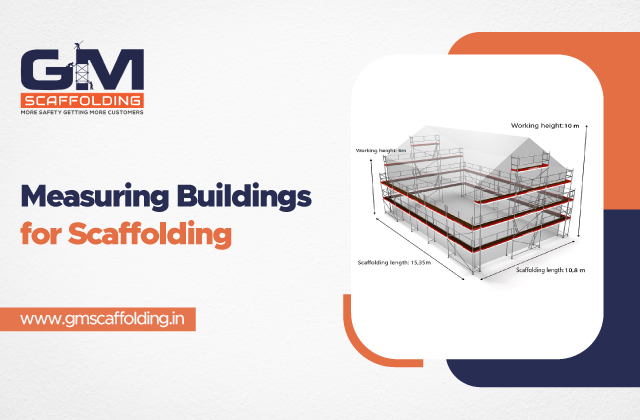
Also, remember platform rules like proper overlap and support OSHA specifies that overlapped platforms must overlap at least 12 inches and only over supports unless restrained to prevent movement. Proper measuring buildings for scaffolding before assembly ensures the right platform heights and staging zones for maximum efficiency and safety.
Rule 9: Know When Engineering Is Required
Very tall scaffolds and certain special configurations may require engineering.
OSHA’s scaffold rules include a specific trigger: scaffolds over 125 feet (38 m) in height above base plates must be designed by a registered professional engineer and built/loaded according to that design.
If you’re anywhere near that scale or doing unusual cantilevers, heavy loading, or complex geometry treat engineering as part of the schedule, not an optional extra.
Related:https://blog.gmscaffolding.in/advantages-of-using-ms-scaffolding-in-construction/
Conclusion:
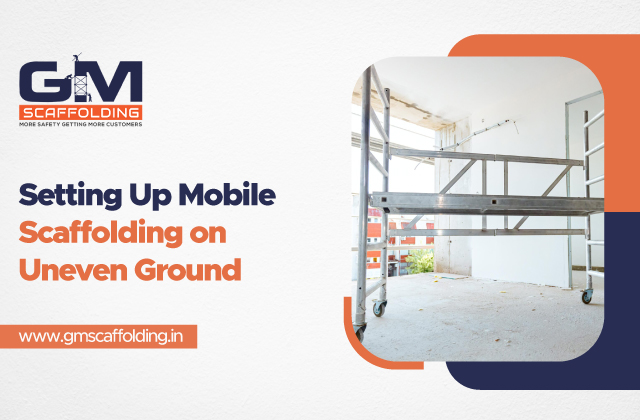
Choosing scaffold height is really about choosing a safe, repeatable workflow. When platform heights match the task, crews waste less time repositioning, quality improves, and supervisors deal with fewer risky improvisations. Build the plan around the work zone, respect fall protection and stability triggers, and follow manufacturer instructions—especially for mobile towers.
FAQ
1) What’s the difference between scaffold height and platform height?
Platform height is where workers stand. Overall scaffold height is the full structure. Platform height drives productivity; overall height drives stability needs.
2) What guardrail height should I expect on many scaffolds?
OSHA commonly sets scaffold toprails for many systems at 38 to 45 inches (with conditions where heights may exceed 45 inches if other criteria are met).
3) What is the 4:1 rule and why does it matter?
If a supported scaffold’s height is more than four times its base width, OSHA requires it to be restrained from tipping using ties/guys/braces or equivalent means.
4) Can I use a simple “3:1 rule” for mobile towers?
Not reliably. PASMA notes the old 3:1 rule no longer works for determining mobile tower stability under EN 1004 approaches; follow the manufacturer’s instructions and component schedules.
5) What’s the fastest sign I chose the wrong height?
If you see constant stretching, leaning, or people “creating steps” with materials—your platform height (or lift spacing) needs adjustment.