Guide to Column Box Rental for Construction Projects
Introduction
On any reinforced concrete building, columns are the backbone of the structure. To cast those columns safely and accurately, you need reliable column formwork often called column boxes. Many contractors choose to rent rather than buy, but without a clear plan, rental costs can climb and schedules can slip.
This Guide to Column Box Rental for Construction Projects walks you through everything from basics and planning, to cost control, safety, and working with rental companies. Whether you’re handling a small G+2 building or a mid-rise commercial project, understanding how column box rental really works helps you pour straighter columns, finish faster, and stay within budget.
What Is a Column Box in Construction?
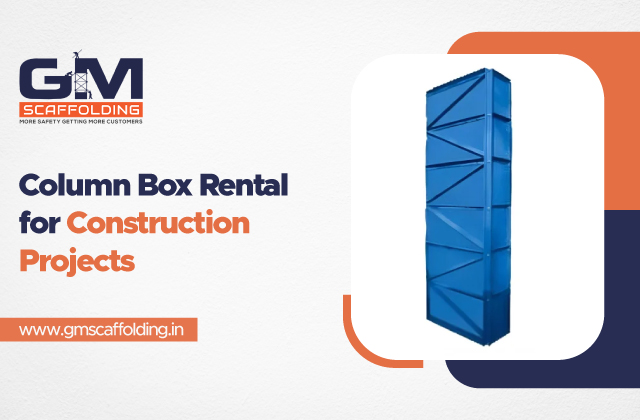
A column box is a reusable formwork system used to shape wet concrete into a vertical column. It:
- Holds fresh concrete in place until it hardens
- Controls the column’s shape, size, and alignment
- Provides the desired surface finish (smooth, textured, or board-marked)
Column boxes can be:
- Modular panels that bolt or clamp together
- Fixed-size steel or MS column shutters
- Adjustable systems that handle multiple dimensions
Instead of building timber shuttering for every column, pre-engineered panels are faster, stronger, and more consistent. Many construction projects in the region prefer using column boxes along with scaffolding in Coimbatore for efficient and safe work at height.
When Do You Need Column Box Rental Instead of Buying?
Buying column boxes makes sense if:
- You’re a large contractor with continuous concrete work
- You can store, maintain, and transport formwork between sites
Rental is usually better when:
- You’re a small or mid-sized builder
- Your project is one-off or occasional
- You want access to premium systems without big capital investment
Renting turns a big upfront purchase into a controlled project cost and gives you access to technical support from the rental company.
Understanding Column Box Systems and Their Components
MS/Steel Column Boxes
- High strength and long life
- Great for repetitive use and high pours
- Heavier, usually needs mechanical handling at taller heights
Aluminium Column Boxes
- Lightweight and easier to handle manually
- Good for fast-track projects
- Can be more expensive per square metre
Timber Column Formwork
- Often site-built, not commonly rented as “systems”
- Cheap initially but labour-intensive and less durable
Plastic / FRP Column Systems
- Smooth finish and good reusability
- Sometimes used for decorative or circular columns
Your rental partner may offer one or more of these, depending on your market.
Core Components: Panels, Corners, Ties, and Accessories
Typical column box rental will include:
- Panels – Flat or profiled faces that make up the sides of the column
- Corners or corner angles – Connect the panels at 90° (or other angles)
- Tie rods and wing nuts (where applicable) – Hold opposite panels together
- Clamps or brackets – Fasten joints quickly without bolts
- Walers and bracing – Provide extra stiffness and alignment
- Lifting hooks or eyes – For crane handling of assembled sets
Understanding each piece helps you check deliveries and assemble safely.
Planning Stage: Defining Requirements Before You Rent
Step 1: Identify Column Sizes, Heights, and Quantities
From your drawings and column schedule, list:
- Cross-section sizes (e.g., 300×600 mm, 450×450 mm)
- Clear heights between slab levels or foundation and beam soffit
- Total number of columns per size
- How many pours each column needs (if you’re casting in lifts)
This information tells the rental company how many sets and how many reuses you’ll get from each set.
Step 2: Map Your Construction Schedule and Pour Cycles
Next, look at the timeline:
- How many columns can you realistically cast per day?
- How long will you leave the column boxes in place before stripping?
- Can you rotate one set between multiple grids or blocks?
If your cycle time is efficient, say, casting and stripping within 2–3 days one set can serve several column locations over the course of a week.
Step 3: Check Site Constraints and Handling Methods
Ask yourself:
- Do you have a tower crane or mobile crane available?
- Are access roads and slab edges strong enough for lifting?
- If there’s no crane, can workers manually handle the panel weights?
For sites without lifting equipment, lighter systems may be better even at a slightly higher rental rate.
Cost Factors in Column Box Rental for Construction Projects
Rental Rates: Daily, Weekly, and Monthly Structures
Rental companies may price by:
- Per day
- Per week
- Per month
Rates depend on:
- System type
- Total formwork area supplied
- Duration and volume of business
Security Deposits, Transport, and Handling Charges
Add-ons include:
- Security deposit
- Transport charges
- Loading/unloading and handling
Always confirm what’s included.
Conclusion:
A well-planned Guide to Column Box Rental for Construction Projects is really a guide to better time, quality, and cost control. When you:
- Understand the types and components
- Plan sizes, quantities, and pour cycles
- Optimise set numbers and rotation
- Follow safety and inspection routines
- Work with a reliable rental partner
you turn column box rental into a powerful tool rather than a headache.
With clear information, realistic scheduling, and proper care, your columns will be straighter, finish smoother, and costs more predictable, helping your project stand tall.
FAQ
1.What’s the main benefit of renting column boxes instead of buying them?
Renting avoids upfront investment and gives access to professional systems and technical support.
2.How many column box sets do I need?
Depends on your casting cycle and stripping times.
3.Can one column box handle multiple sizes?
Some are adjustable; others are fixed.
4.How long can I keep rented boxes?
As long as rental is paid—efficiency reduces total cost.
5.Who is responsible for safety design?
A combination of the engineer, contractor, and rental company.